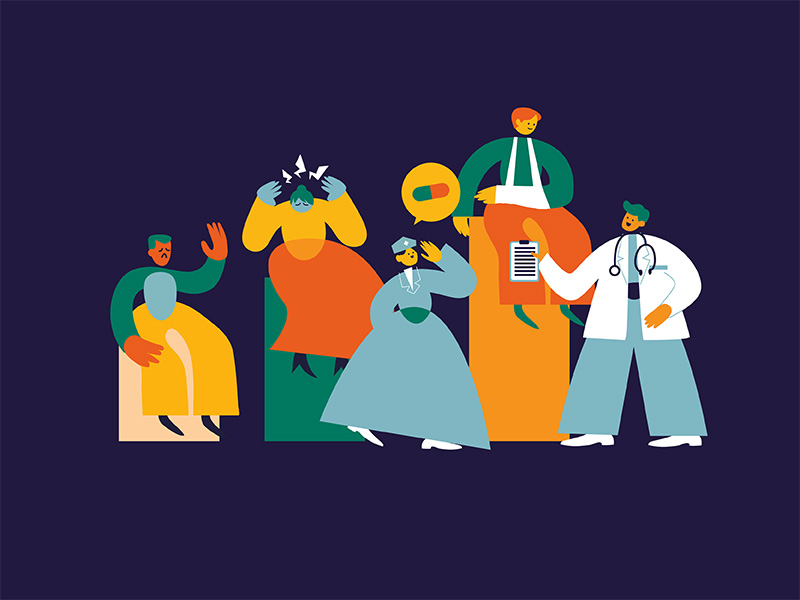
3D medical animation uses modelled anatomy, devices, and molecules to show what cannot be filmed: a tumour invading tissue, a drug binding to a receptor, a surgeon’s approach through the skull. Its value is spatial. When understanding depends on seeing inside or around something, 3D does what diagrams cannot.
This guide covers the five main uses of 3D medical animation with examples, its four real benefits, when 2D is the better choice, and what to check before hiring a studio.
5 Ways to Use 3D Medical Animation, with Examples
1. 3D Medical Animation for Patient Education
3D animation helps patients understand what is happening inside their own bodies. Take an animation explaining what cancer is: instead of medical jargon, it shows how cancer develops, then zooms in to show cells invading surrounding tissue and spreading.
One caution for patient education: realism can frighten. For a newly diagnosed patient, a calmer stylised 3D or a 2D explanation often works better than photoreal tissue.
2. 3D Medical Animation for Medical Training and Education
Healthcare animation, both 2D and 3D, takes learners into settings and scales they could never observe directly. Designed as a classroom tool, the video below walks through the inner workings of white blood cells, showing cellular structures and organelles along the way. This is core healthcare professional education territory.
3. Surgical Procedure 3D Medical Animation
3D is especially strong for surgical procedures: the instruments used, the order of steps, and the anatomy at each stage. Take a craniectomy. The animation starts with the patient’s head, then zooms in to show the incision in the scalp and the careful removal of a section of skull, from an angle no camera could occupy.
4. Pharmaceutical 3D Medical Animation
Mechanism-of-action animation shows how a drug interacts with the body, which cells it targets, and how it relieves symptoms, instead of leaving healthcare providers and patients to decode a dense leaflet. It also keeps clinicians current on new treatments. Because it usually carries product claims, expect medical, legal, and regulatory review before release.
5. 3D Medical Device Animation
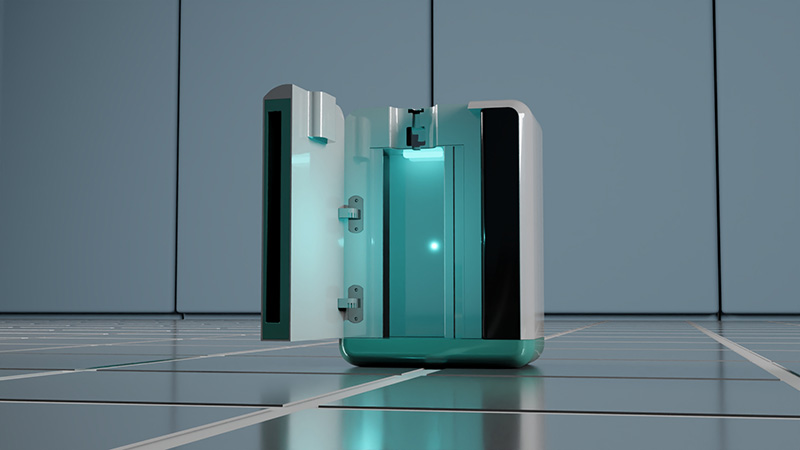
Unlike static images or physical models, 3D animation shows how a device works internally and how it is used in real scenarios, including ease of operation and patient comfort. The example below shows a blood testing device. This is where 3D most clearly earns its cost, and it sits under medical device and pharma product explainers.
Wondering about budget? See how much medical animation costs.
4 Benefits of Using 3D Medical Animation
1. In-depth Exploration
3D lets viewers examine structures, procedures, and devices from every angle, going beyond what static images or diagrams can show. Healthcare professionals and patients can follow intricate detail that would otherwise have to be imagined.

2. Interactive Experiences
Because 3D assets are real models, they can be reused inside interactive applications such as virtual simulations and learning tools, where users rotate structures, explore scenarios, and see responses in real time. A linear video cannot do this; the same model built once can serve both.
3. Precision and Clarity
3D allows anatomical structures and procedures to be shown in close detail, which supports learning and patient understanding. Precision depends on process, not software: a qualified expert should review at the script, model, and animation stages, because an anatomical error caught after rendering is the most expensive correction in the medium.

4. Stronger Marketing and Sales
Medical devices, drugs, and software are hard to sell when the benefit happens inside the body. 3D animation shows the mechanism directly, which gives sales teams something concrete to point to, and the same asset serves conference stands, sales meetings, and product pages.
When 3D Is Worth It, and When 2D Is Enough
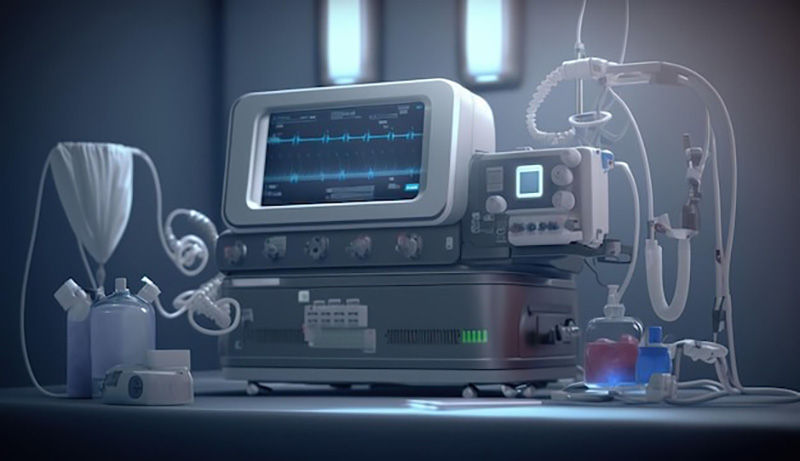
3D is a significant investment of time, budget, and review effort. The deciding question is whether your subject has meaningful geometry.
- Choose 3D for device mechanisms, anatomical structures, surgical approaches, and molecular interactions, where seeing inside or around something is the point.
- Choose 2D for processes, care pathways, protocols, and patient journeys. Forcing 3D onto a flowchart adds cost without adding understanding.
- Consider 2.5D for patient-facing content that needs depth and warmth rather than clinical precision. It is faster and cheaper than full modelling.
Many projects need both in one script: 2D for the pathway, 3D for the passage where the mechanism has to be exact. Our 3D animation page explains how we scope that mix.
Finding the Right 3D Medical Animation Company
1. Experience and Portfolio
Look for a proven track record in medical animation, with diverse projects that show accurate visualisation of complex concepts. Ask specifically for 3D samples with a camera moving through or around a structure, because some studios offer 3D as a capability and deliver 2.5D. Client testimonials and named references in your therapeutic area complete the picture.
Read more: 9 Best 3D Medical Animation Companies Compared
2. Technical Expertise and Software Proficiency
Check that the studio uses current modelling, rendering, and animation tools, and ask who builds the models: in-house or subcontracted, and from what source, such as product specifications, scan data, or reference illustration.

3. Communication, Collaboration, and Review
A good studio understands your goals from the start, gives regular updates, and works well with your clinicians and other stakeholders. The most important question is at which stages a subject-matter expert reviews: on 3D, that needs to include the model stage, not only the final cut.
At F. Learning Studio, every video in a project is tracked by production status, so both sides always know what remains. Our production process shows who signs off at each stage.

4. Cost-Effective, but High-Quality
Look for transparent pricing and packages that fit your needs, without trading away accuracy. Confirm whether you are quoted per finished minute or per project, and what revisions are included.

See what 2D versus 3D would cost for your project
Pick your style, runtime and complexity, and compare the two on screen before you brief anyone.
Open the animation cost calculator About two minutes. No email required to see the estimate.Where to Start
3D medical animation earns its cost wherever understanding depends on seeing inside or around something. Start by deciding whether your subject has that geometry, then scope which parts need 3D and which are better in 2D.
F. Learning Studio has produced healthcare and medical animation since 2016 for organisations including the NHS, NYU Langone Health, Stanford University, and Evelina London Children’s Healthcare, and now offers 3D animation alongside 2D. Our published 3D case work to date is scientific visualisation, such as the keynote animation below, so ask us for samples relevant to your subject.
Not sure whether your project needs 3D?
Bring the condition, procedure or device, who has to understand it, and who signs off on accuracy. In 30 minutes you will get a recommendation on 2D, 2.5D or 3D, a scoped figure, and where review needs to sit in your timeline.
Producing medical animation since 2016 · 5.0 rating on Clutch · Trusted by the NHS, NYU Langone Health and Stanford University
- WhatsApp: (+84) 378 713 132
- Email: [email protected]
- Fanpage: https://www.facebook.com/f.learningstudio
- LinkedIn: https://www.linkedin.com/company/f-learning-studio/
FAQs About 3D Medical Animation
What is 3D medical animation?
3D medical animation uses modelled anatomy, devices, and molecules to show medical processes that cannot be filmed, such as a drug binding to a receptor or a surgical approach through the skull. It is used for patient education, clinical training, surgical communication, pharmaceutical mechanism of action, and medical device explanation.
When should I choose 3D over 2D medical animation?
Choose 3D when understanding depends on seeing inside or around something: device mechanisms, anatomical structures, surgical approaches, or molecular interactions. Choose 2D for processes, care pathways, protocols, and patient journeys. Many projects combine both in one script.
How much does 3D medical animation cost?
3D sits at the top of the medical animation price range because it requires modelling, rigging, texturing, lighting, and rendering on top of animation, plus expert review. See the medical animation cost guide for current ranges, or use an animation cost calculator for a figure based on your own scope.
How long does a 3D medical animation take to produce?
Complex 3D medical projects commonly run 8 to 14 weeks, with clinical and scientific work at the longer end because expert review happens at the script, model, and animation stages rather than only at delivery.
Who checks the accuracy of a 3D medical animation?
A qualified subject-matter expert should review the script, the models, and the animation. On 3D, review at the model stage matters most, because an anatomical error caught after rigging and rendering is the most expensive correction to make.

Sean Bui, the founder and creative director of F. Learning Studio, is a respected leader in the e-learning and multimedia production industry.
With over 10 years of experience, he has dedicated his career to helping organizations create engaging and impactful learning experiences. Under his leadership, F.Learning Studio has grown into a trusted partner for organizations in the education, healthcare, and corporate training sectors, producing over 2,000 minutes of educational animation.
Sean’s expertise in translating complex concepts into compelling animated videos and interactive learning experiences, as well as his active involvement in the e-learning community, have earned him a reputation as a trusted partner and thought leader in the field of educational technology.