







Before
After














You’ll talk to a learning designer about one instruction patients keep getting wrong.
F.Learning helps healthcare organizations create patient education that patients can understand, remember, and act on once they’ve left the clinical setting.
Built for clinicians, nurse educators, and patient education teams at hospitals, academic medical centers, and health organizations whose patients have to act on instructions at home.
Healthcare organizations already provide large amounts of patient information: consultations, discharge instructions, consent forms, care guides, printed documentation.
The challenge begins when patients need to apply unfamiliar information on their own, outside the clinical environment, with nobody there to clarify. That is where instructions get forgotten, treatment expectations get misread, and self-management quietly slips.
The U.S. Multi-Society Task Force on Colorectal Cancer has estimated that 20 to 25 percent of colonoscopies are done with inadequate bowel preparation, which leads to missed lesions and repeat procedures. Its updated guidance sets a target of at least 90 percent adequate preparation, and names patient education as one of the levers. (U.S. Multi-Society Task Force on Colorectal Cancer)
The most common patient education failure isn’t missing information. It’s information that was correct in the room and unusable at the kitchen table.
The goal isn’t delivering information. It’s a patient doing the right thing, correctly, when the clinician isn’t there.
| F.Learning designed for the moment of use | A printed leaflet or discharge sheet | The clinician's verbal explanation | A generic video from a health library | A patient portal page | |
|---|---|---|---|---|---|
| Explains what is happening, not just what to do? | Strong: the reason behind each instruction | Weak: lists the steps | Strong: can explain, in the minutes actually available | Partly: the condition, not your protocol | Weak: text, usually |
| Recalled correctly at home, alone? | Strong: built for the moment of use, not the explanation | Partly: read once, under stress | Weak: gone once they leave | Partly: not your instructions | Partly: only if they log in |
| Works across literacy and languages? | Strong: scoped per population, with versions per language | Weak: depends on reading level | Partly: depends on an interpreter | Weak: one version for everyone | Weak: text-heavy |
| Tone lowers anxiety? | Strong: tone and pacing are designed | Partly: clinical by default | Strong: reads the person in front of them | Partly: varies | Partly: neutral |
| Cost per patient and speed to update? | Weak: highest upfront, flat after | Strong: cheap, and quick to change | Weak: the most expensive per patient | Strong: free, if one matches | Partly: low |
| Best when | patients have to act correctly at home, alone | the instruction is short and simple | the patient needs to ask questions | the topic is general, not your protocol | patients already use the portal |
👈 Swipe horizontally to view full table 👉
In short: A leaflet is cheap and quick to change. Nothing replaces a clinician with time to explain and answer questions. F.Learning is strongest where the patient has to follow several steps correctly at home, days after the consultation, with nobody to ask, and it is the most expensive option to produce.
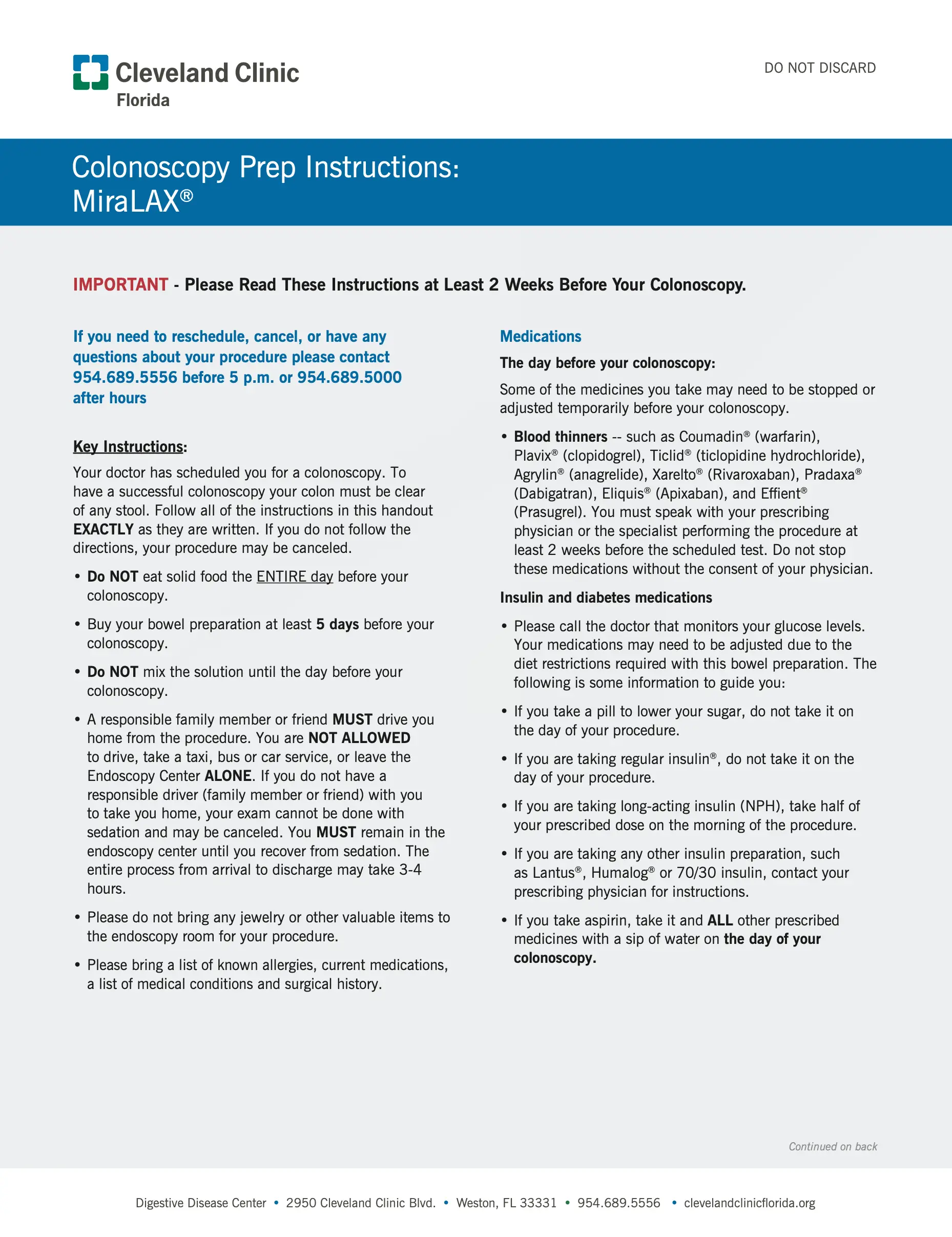
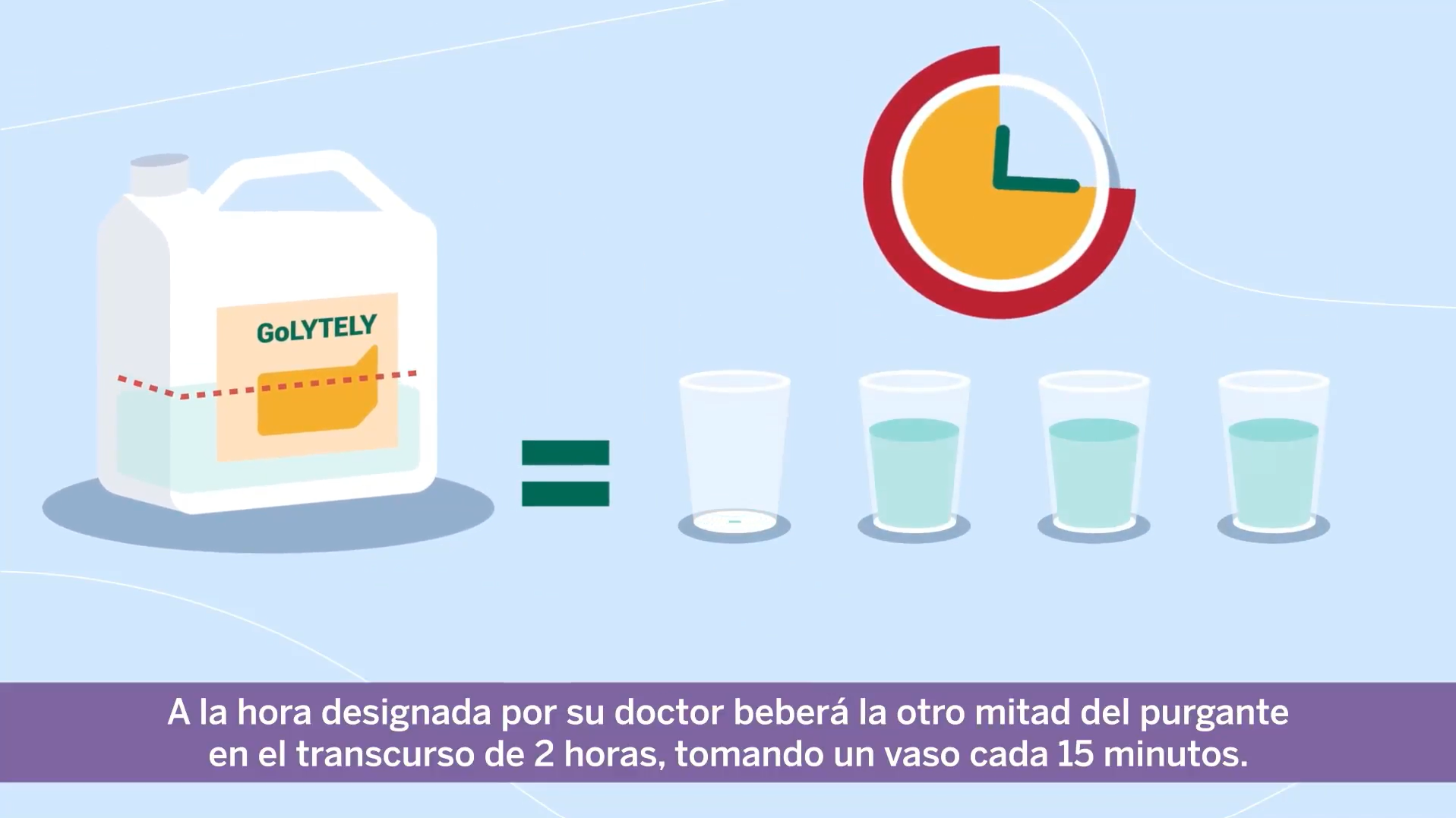
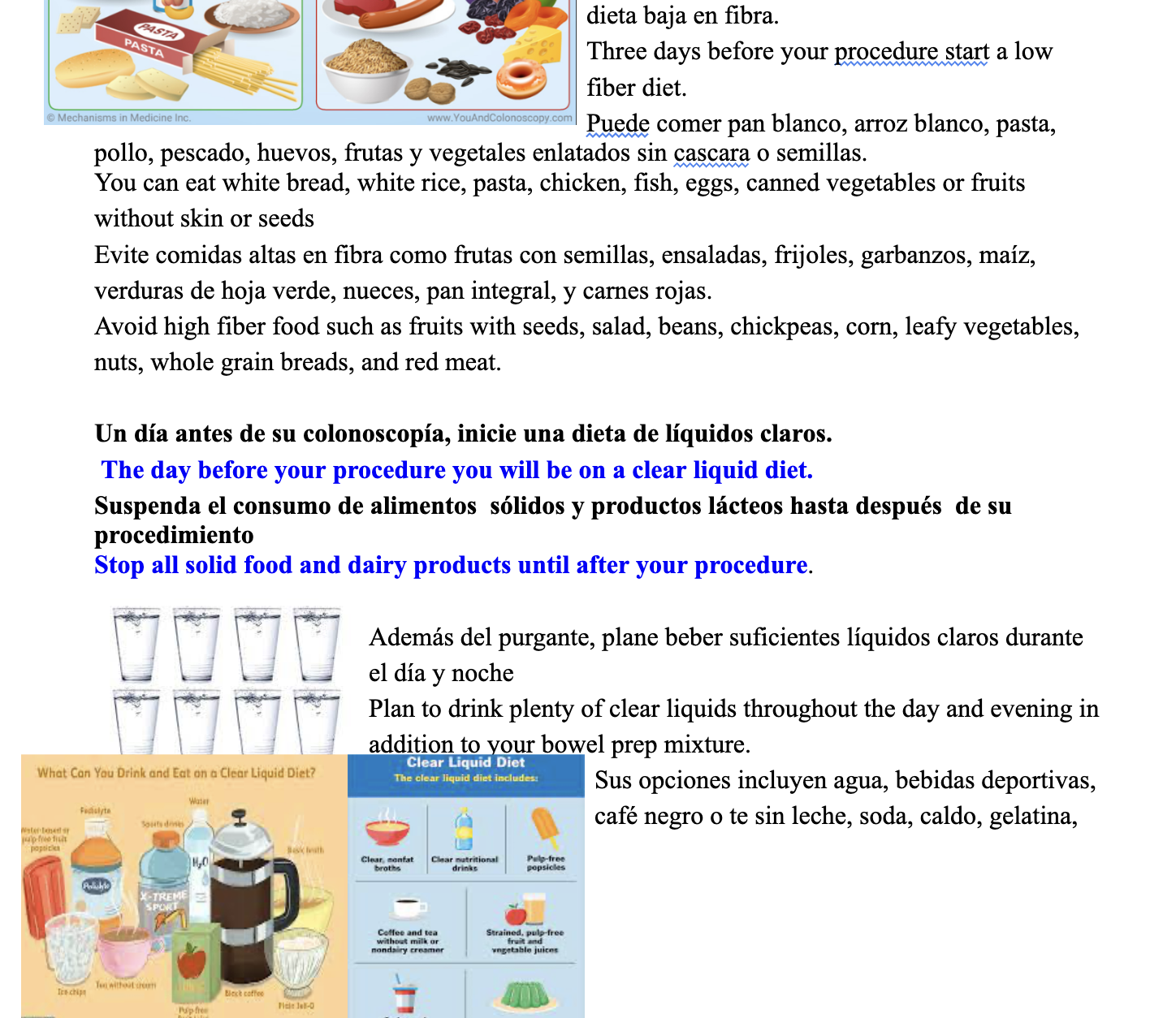
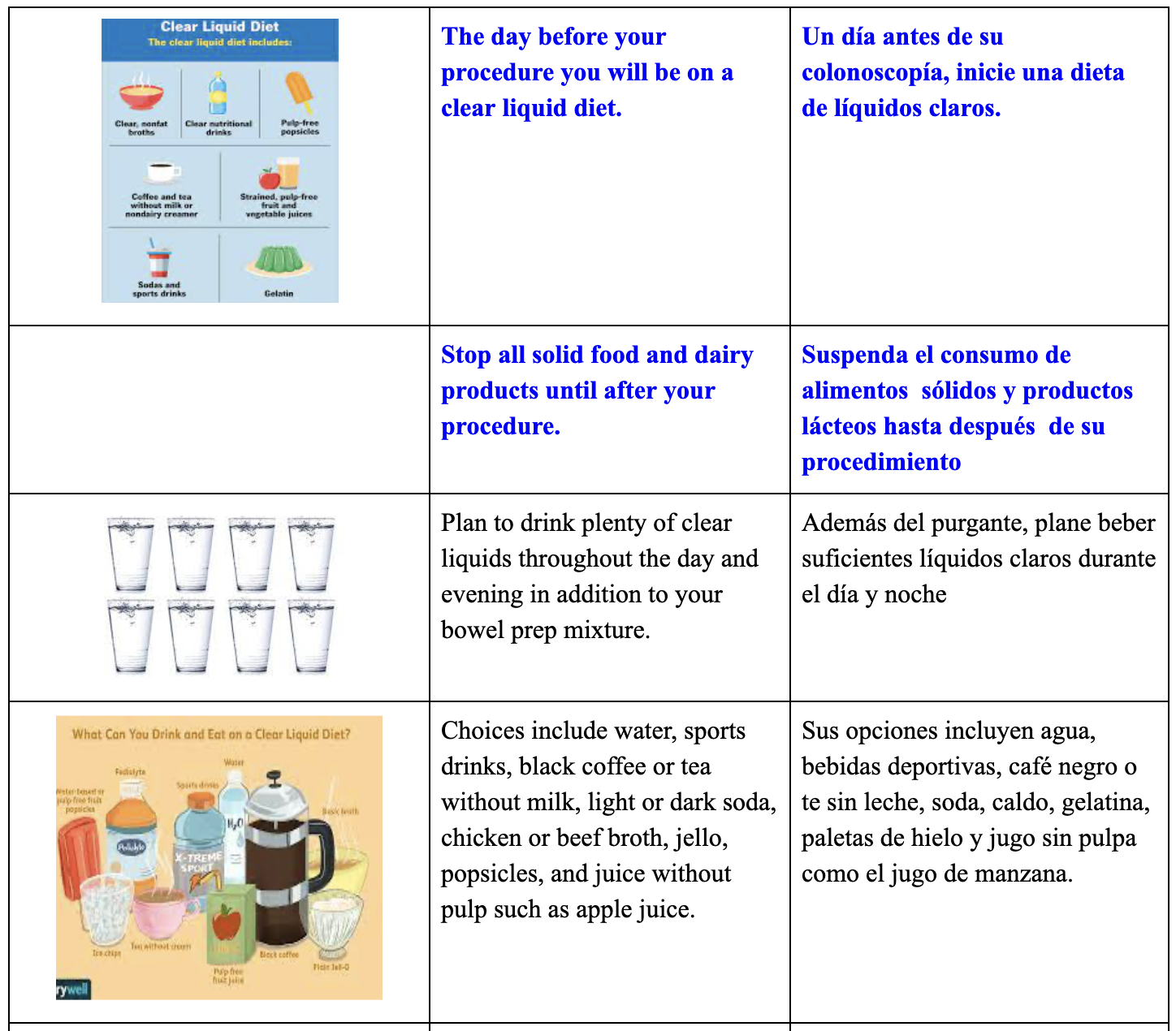
The same preparation instructions, in the order they’re written and in the order they’re done. The written version is complete. The second one is what a nervous patient can follow at 8pm the night before.
For a simple, one-off instruction, a clear leaflet is enough and costs a fraction of any video, and we will say so.
This work earns its cost when patients have to follow several steps correctly at home, days after the consultation, with nobody to ask.
In practice, patients take in health information while anxious, distracted, or overwhelmed, and need to recall it correctly later, at home, with no clinician to ask.
Colonoscopy preparation is the clearest example. The instructions are given in clinic. They’re needed the evening before, at home, by someone who may not read English well and is already nervous about the procedure. If the preparation is wrong, the procedure often has to be repeated.
So we design for that second moment. What does the patient need to see, in what order, to do this correctly on their own? What in the explanation would make them more anxious rather than less? And what has to hold whether they read at university level or barely read at all?
Explained in ther consultation room
Patient goes home anxious and remembers part of it
We design for this
Need the evening before, alone
A step is missed, the procedure is repeated
Where F.Learning designs
What happens by default
The costs
The instruction is given in the first box. It’s used in the third.
An academic medical center needs colonoscopy preparation education for patients who either don’t speak or understand English, or have low levels of formal education and struggle with the concepts in written instructions.
We built multilingual video education designed around how preparation is actually done at home, with representation that reflected the patient population and visuals that carried the instruction without depending on reading.
Patients could access the same colonoscopy preparation guidance even when English wasn’t their first language or written instructions were difficult to follow. Multilingual narration and visual guidance made the preparation steps easier to understand without relying on written English.
Patients struggled to understand rectal bleeding and colorectal cancer, and many felt overwhelmed by sensitive information.
We redesigned the explanation into a calm, patient-friendly animation showing what was happening in the body, why specific next steps mattered, and the points patients most often misunderstood.
The animation gave patients a clearer understanding of rectal bleeding and colorectal cancer, why further investigation might be needed, and what to expect next. Dr. Manish Chand used the video on his website and in the clinic, giving patients access to the same clear explanation both during and beyond their visit.
Many people had migraine attacks around their period but couldn’t tell what it meant, or what to ask their clinician.
We created a patient explainer that defines menstrual migraine and its types, explains why cycle timing matters, and guides patients toward the right questions for their next appointment.
Patients could more clearly identify whether their migraine pattern was linked to their menstrual cycle, understand why timing mattered, and know what to discuss with their clinician. The explainer has also reached 125,000+ views on AMD’s YouTube channel, extending that education well beyond a single appointment.
“We faced many difficulties before finding F.Learning. Some companies were too expensive and didn’t offer customized graphics or high-quality videos. Also, others were far too time-consuming.”
Melissa Calise – Head of Communication, Association of Migraine Disorders
Different patient education problems need different approaches.
Medical animation (Healthcare & Medical Animation) | Treatment visualization (3D Animation)
Best suited for procedure preparation, surgery education, treatment explanation, and recovery.
Visual care guides (Healthcare & Medical Animation) | Patient-friendly infographics (Documents & Graphic Design)
Best suited for discharge education, medication guidance, and home care instructions.
Scenario-based communication (Interactive Learning Design) | Character animation (Character Animation)
Best suited for self-management, lifestyle change, treatment adherence, and emotionally sensitive conversations.
Interactive learning (Interactive Learning Design) | Modular education systems (Content Structuring)
Best suited for chronic condition management and long-term treatment programmes.
We work with your healthcare team and existing materials to find where confusion actually happens.
Information is reorganized into the order the patient will need it, not the order it’s documented in.
Formats are chosen by health literacy, language, emotional sensitivity, and where the patient will use it.
Your clinical team reviews for medical accuracy. We review separately for whether a patient can still follow it.
Clinical sign-off sits with your team. We structure the review so it’s fast and precise.
More on leadership and manager capability:
Yes. We scope explanation depth and language complexity for the specific patient population, and develop adapted versions for different segments from the same core content.
A focused procedure or condition explainer typically runs 6 to 10 weeks, depending on medical complexity and the number of clinical review cycles.
Pick the one instruction your patients most often get wrong. We'll work out what they need to see the evening before, not in the consultation room, before anyone talks about production.
30 minutes with a learning designer. No deck required.
Our services