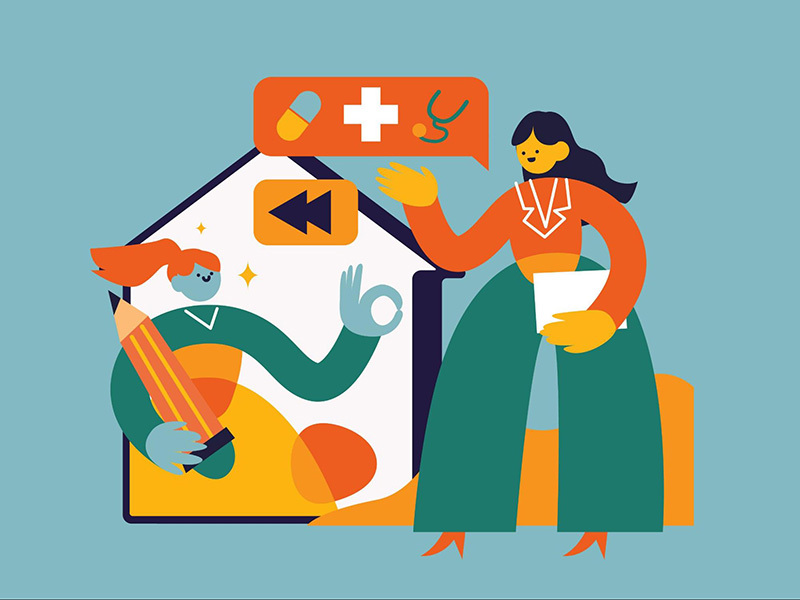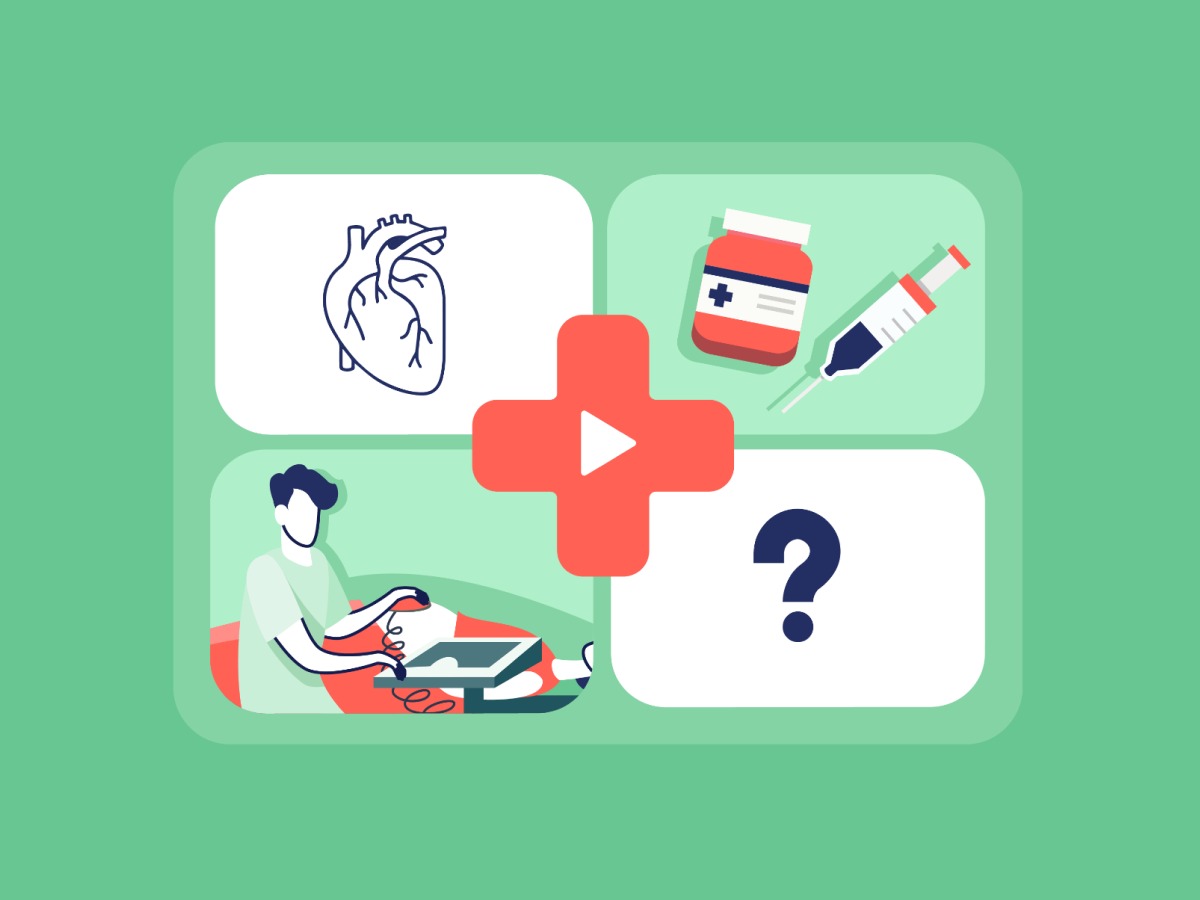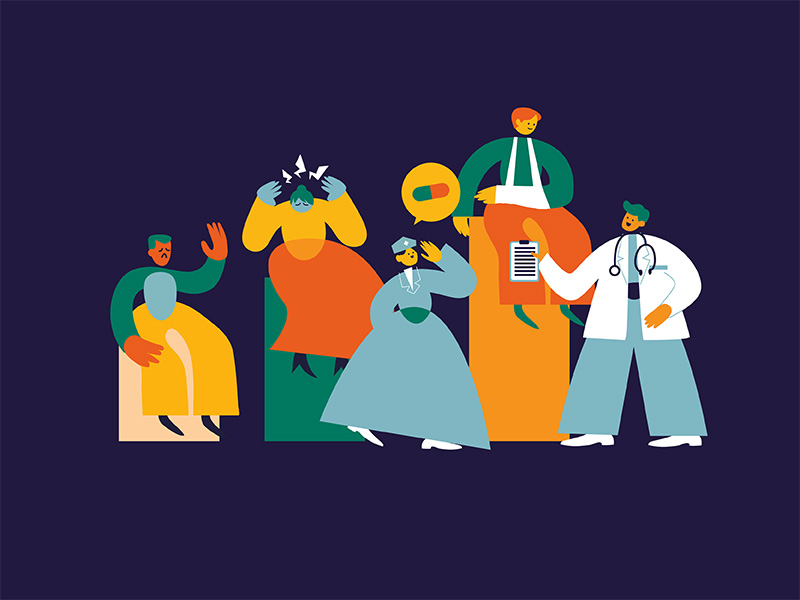
2D medical animation uses flat illustration, motion graphics and characters to explain conditions, treatments, medicines and procedures. It is the most cost-effective way to make medical information clear for patients and staff, and it handles sensitive subjects more gently than realistic 3D.
This guide covers the main 2D styles, five benefits, what 2D medical animation costs, four applications with examples, the seven-step production process, and when 3D is the better choice. Prefer to watch? The video below covers the benefits in under three minutes.
| At a glance | 2D medical animation |
| Best for | Patient education, staff training, pharmacology, mental health, public health campaigns |
| Typical cost | Around $100 per minute with a freelancer using templates, about $1,000 per minute for custom work at a small studio, $8,000 or more at a large studio |
| Typical timeline | Four to eight weeks for a one to two minute video |
| Main styles | Whiteboard, motion graphics, character animation, frame-by-frame |
| Main limit | Less depth and spatial detail than 3D for complex anatomy and devices |
What Is 2D Medical Animation?
2D medical animation presents medical content as moving flat images: illustrated organs, icons, diagrams and characters. Because the artist controls every shape, it can simplify anatomy to the parts that matter and leave out anything that would distract or upset the viewer. There are four common styles:
- Whiteboard animation: drawings appear on a clean background as the narration speaks. Calm, academic and affordable.
- Motion graphics: icons, text and diagrams in motion. Ideal for processes, data and device features.
- Character animation: patients, clinicians or mascots acting out a story. Best for behaviour change and sensitive topics.
- Frame-by-frame animation: hand-drawn movement, frame by frame. The most expressive 2D style, and the most labour-intensive.
5 Benefits of Using 2D Medical Animation
1. Simpler Communication
Explaining medical ideas verbally is hard, and every explanation depends on who is giving it. An animation can show how a disease affects the body or how a treatment works, so the viewer sees the idea instead of decoding jargon.
2. Better Engagement and Retention
Take bradykinesia, the slowness of movement seen in Parkinson’s disease. The word is hard to pronounce and harder to picture. Turned into a short visual story, it becomes something patients and professionals can both understand and remember. Colour and movement hold attention, and people recall what they saw better than what they read.

3. Consistent Messaging
A verbal explanation changes with every clinician and every appointment. An animation delivers the same message every time, so every patient receives the same information and misunderstandings drop.
4. Stronger Branding and Visual Identity
Custom animation can carry a clinic’s or company’s colours, typeface and illustration style. Across a series, that builds a recognisable, trusted identity that stock footage cannot.

5. A Closer Bond with Patients
Clear, accessible information shows patients that their provider cares about their understanding and comfort. That builds trust, which supports better conversations and better adherence to treatment.
How Much Does 2D Medical Animation Cost?
Cost depends mainly on who produces it. A freelancer using template assets may charge around $100 per minute. A small studio producing custom work with original illustration typically charges about $1,000 per minute, and a large professional studio $8,000 per minute or more. Within those ranges, topic complexity, runtime, number of characters, interactivity and review rounds move the price. Our medical animation cost guide breaks down each factor.

Get a figure for your 2D medical animation
Choose the style, runtime and complexity, and see an estimate on screen before you request quotes.
Open the animation cost calculator About two minutes. No email required to see the estimate.4 Applications of 2D Medical Animation, with Examples
These four uses cover most 2D medical animation projects. The short video below runs through all four.
1. Training Healthcare Professionals
Animation shows procedures, anatomy and techniques clearly and keeps staff engaged in e-learning. SimpleNursing, a US nursing education company, uses 2D animation across its courses to help nursing students understand difficult concepts as they prepare for the NCLEX licensing exam. This is core healthcare professional education.
2. Patient Education
Animation makes surgery and chronic illness easier to grasp, and patients can watch at their own pace and rewind. Far more people will watch a short video about a common condition than read several leaflets. The example below explains rectal bleeding for a UK colorectal surgeon’s patients. See our patient education work for more.
3. Mental Health
2D animation can explain mental health conditions, therapy techniques and coping strategies gently, for patients, families and schools. Characters create distance, so viewers can recognise themselves without feeling singled out. The three-minute video below explains a sensitive topic for children.
4. Pharmacology
Drug mechanisms, effects and usage are dense on paper. Animated pharmacology videos make them easier to follow and remember. The example below, from a migraine explainer series for the Association of Migraine Disorders, covers over-the-counter migraine medication. Compare it with the leaflet in the box. For more, read our guide to pharmaceutical explainer videos.
Looking for a closer match to your project? Browse our healthcare and medical animation work, filterable by style and audience.
How to Create a 2D Medical Animation in 7 Steps
Creating 2D medical animation takes creativity, technical skill and subject expertise. The most important column below is the last one: who reviews each stage.
| Step | What happens | Who reviews |
| 1. Analysis and consultation | Define the audience, the goal and the key message, and consult healthcare professionals | Client and clinical lead |
| 2. Research and scriptwriting | Research the topic and write a clear, concise script with sources for every claim | Clinical reviewer |
| 3. Concept design | Develop the visual style, tone, colour palette and characters | Client |
| 4. Storyboard and illustration | Lay out every scene and create the final illustrations | Clinical reviewer and client |
| 5. Voiceover | Record narration that matches the pace of the visuals | Client, plus pronunciation check by clinical reviewer |
| 6. Animation and editing | Add motion, transitions, music and sound effects | Client |
| 7. Review and feedback | Stakeholders review the full cut and final changes are made | Clinical reviewer and client |

Timelines depend on topic complexity, length and detail. A one to two minute video typically takes four to eight weeks, while a large series can run for several months.

Read more: Top 8 Medical Animation Software, Free and Paid
2D or 3D Medical Animation?
2D animates flat images in sequence; 3D builds three-dimensional models and animates them in virtual space. Choose 2D for processes, care pathways, patient education and sensitive topics, where clarity and a calm tone matter most. Choose 3D for anatomy, devices and mechanisms that only make sense in depth. Many projects combine both. Our 2D or 3D healthcare animation guide compares them in detail.
Why Work with F. Learning Studio for 2D Medical Animation?
1. Value Within Your Budget
As a Vietnam-based studio, our rates are typically around 30% below comparable US-based companies, and we tailor scope to both your needs and your budget, from a single explainer to a full course series.

2. A Wide Range of 2D Medical Animation
Our medical animation services cover patient education, professional training, pharmacology and public awareness campaigns, in whiteboard, motion graphics, character and frame-by-frame styles. You can see the range in our portfolio.
3. Healthcare Experience Since 2016
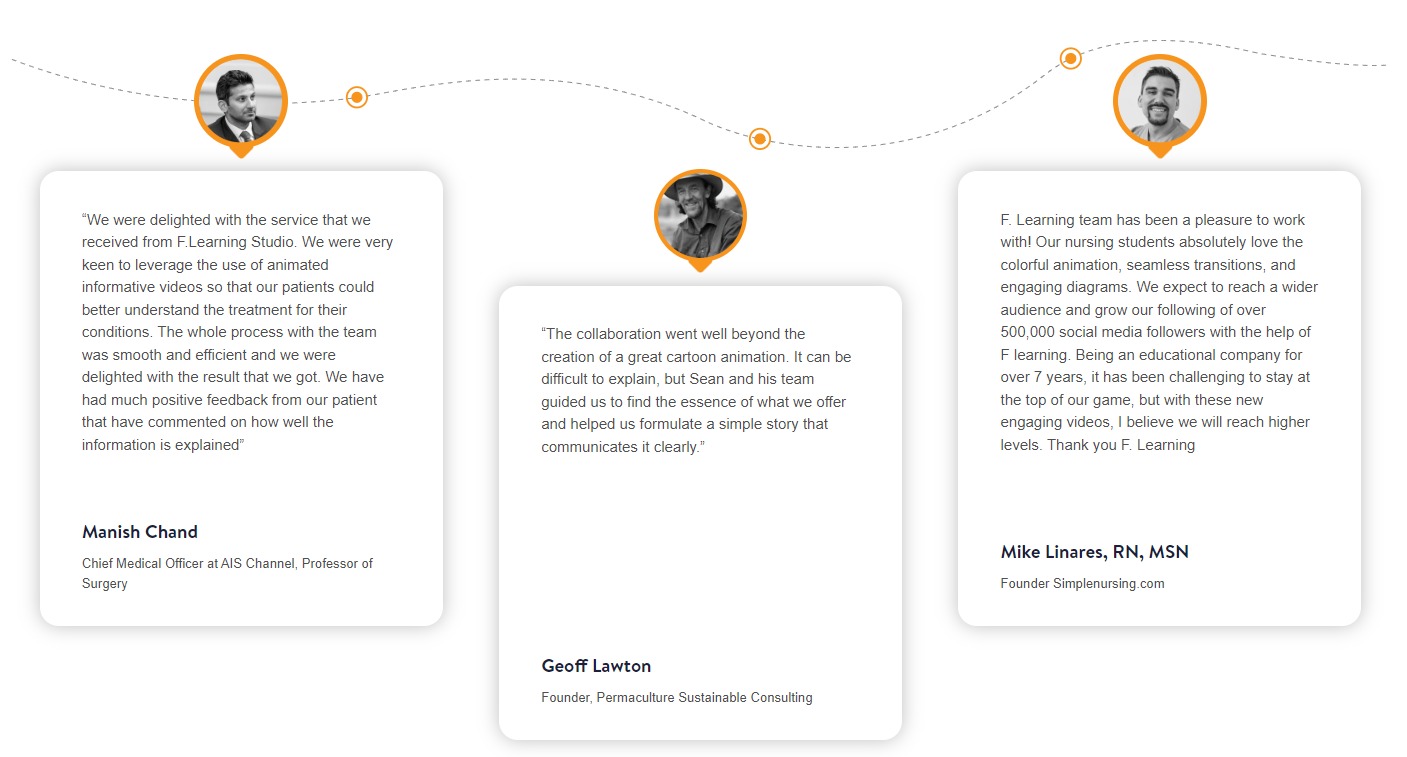
Since 2016, we have produced healthcare animation for organisations including the NHS, NYU Langone Health, IntelyCare, Boehringer Ingelheim and SimpleNursing. For SimpleNursing alone, we have produced more than 700 minutes of animation; its case study reports more than 200,000 learners and over 500,000 social media followers.
Where to Start
2D medical animation is the right starting point for most patient education, training and pharmacology projects: clear, calm and affordable. Decide who needs to understand the topic and what they should do afterwards, then choose the style that fits that audience.
Have a medical topic that needs to be clearer?
Bring the condition, treatment or procedure and who needs to understand it. In 30 minutes you will get a recommended 2D style, a scoped figure, and where clinical review should sit in your timeline.
Producing healthcare animation since 2016 · 5.0 rating on Clutch · Trusted by the NHS, IntelyCare and SimpleNursing
- WhatsApp: (+84) 378 713 132
- Email: [email protected]
- Fanpage: https://www.facebook.com/f.learningstudio
- LinkedIn: https://www.linkedin.com/company/f-learning-studio/
FAQs About 2D Medical Animation
What is 2D medical animation?
2D medical animation uses flat illustration, motion graphics and characters to explain conditions, treatments, medicines and procedures. Common styles are whiteboard, motion graphics, character animation and frame-by-frame.
How much does 2D medical animation cost?
Around $100 per minute with a freelancer using templates, about $1,000 per minute for custom work at a small studio, and $8,000 or more per minute at a large professional studio. Complexity, runtime, interactivity and review rounds move the price within those ranges.
How long does it take to create a 2D medical animation?
A one to two minute 2D medical animation typically takes four to eight weeks, depending on topic complexity, detail and review rounds. Large series can run for several months.
What software is used to create 2D medical animations?
Common tools include Adobe After Effects, Adobe Animate, Adobe Illustrator, Moho and Toon Boom Harmony, with Premiere Pro for editing and sound.
What is the difference between 2D and 3D medical animation?
2D animates flat images in sequence, while 3D builds three-dimensional models and animates them in virtual space. 2D suits processes, patient education and sensitive topics; 3D suits anatomy, devices and mechanisms that need depth.
What are the future trends in 2D medical animation?
Expect more interactive features, such as clickable explainers and quizzes, augmented reality for patient engagement, and AI-assisted production steps that shorten timelines. Clinical review remains essential whatever the tools.
Read more:
- 2D or 3D Healthcare Animation: How to Choose
- Medical Animation: A Complete Guide with Examples
- 8 Healthcare Explainer Video Examples
- How Much Does 2D Animation Cost Per Minute?

Sean Bui, the founder and creative director of F. Learning Studio, is a respected leader in the e-learning and multimedia production industry.
With over 10 years of experience, he has dedicated his career to helping organizations create engaging and impactful learning experiences. Under his leadership, F.Learning Studio has grown into a trusted partner for organizations in the education, healthcare, and corporate training sectors, producing over 2,000 minutes of educational animation.
Sean’s expertise in translating complex concepts into compelling animated videos and interactive learning experiences, as well as his active involvement in the e-learning community, have earned him a reputation as a trusted partner and thought leader in the field of educational technology.