

Motion graphics vs character animation is not a contest between a “modern” and a “creative” option. Motion graphics usually fit messages that depend on structure, labels, diagrams, data, or process. Character animation is often more useful when viewers need to recognize a human situation, follow a relatable story, or connect emotionally with a decision. The right choice depends on what your audience must understand and do next—not on which style looks more engaging in isolation. This guide compares both formats, explains where each works best, and gives you a practical way to choose for marketing, learning, healthcare, or product communication.
Motion Graphics and Character Animation: What Do They Mean?
Motion graphics are animated visual elements such as shapes, icons, typography, diagrams, interfaces, and other graphic systems. In practical terms, what is motion graphics? It is a way to make information move so viewers can see relationships, sequence, emphasis, or change. A process diagram can build step by step; a label can appear beside the item it describes; a visual system can guide attention without introducing a speaking character. Character animation uses animated people, creatures, or personified objects to communicate through movement, expression, interaction, and situation. The character becomes part of the explanation rather than simply carrying a visual label. These formats can overlap: a character-led scene may use motion graphics for captions, diagrams, or transitions. The useful distinction is therefore not software or production category. It is the primary communication language: structured visual explanation versus human-centered action. For broader context on animation formats, see this comparison of 2D and 3D animation.
Similarities Between Motion Graphics and Character Animation
Both formats can help turn an abstract idea into something viewers can follow. They can organize attention, support a spoken explanation, reinforce a written message, and make a sequence easier to observe. Both can also be adapted to marketing, learning, healthcare, and product communication when the visual choices match the audience and context. Neither format automatically creates understanding. A beautifully animated sequence can still leave viewers unsure what matters, what applies to them, or what action comes next. The shared job is to reduce unnecessary interpretation and give the viewer a clearer path through the message. Both approaches can also combine visual explanation with narration, on-screen text, sound, or interactive content. The difference emerges when you decide what carries the meaning: a system of visual relationships, a character’s experience, or a deliberate combination of both. Treat the choice as a communication decision first and a style decision second.

Differences Between Motion Graphics and Character Animation
The clearest difference in motion graphics vs character animation is the way each format represents meaning. Motion graphics generally foreground information: a timeline, product feature, workflow, comparison, statistic, or conceptual relationship. Its visual language can feel direct and organized because shapes, icons, text, and diagrams carry the explanation. Character animation foregrounds experience: someone encounters a problem, makes a choice, responds to a consequence, or reaches an outcome. That makes behavior and emotion more visible, especially when the audience must recognize a situation rather than memorize a sequence. Motion graphics often answer, “How does this work?” Character animation often helps answer, “What does this feel like, and what might someone do?” These are tendencies, not rigid rules. Either format can tell a story or explain a system, but the emphasis changes. For teams comparing formats more broadly, this guide to live-action versus animation offers another useful decision lens.

Choose the Format Based on Your Audience and Message
Start with the audience’s task, not the animation category. Ask what viewers already know, what they may find confusing, and what they must do after watching. If the message contains connected parts, technical relationships, or a sequence that must be understood accurately, a structured visual approach may be easier to follow. If the message concerns a person’s concern, choice, mistake, conversation, or everyday context, a character-led approach may make the situation more recognizable. Message complexity matters, but complexity alone does not decide the format. A complicated idea may need motion graphics to map its logic, character animation to show its consequences, or both to connect the two. Audience sensitivity matters as well, particularly in healthcare or training, where relevance and clarity can matter more than visual novelty. For sensitive medical subjects, this guide to creating surgery animation without disturbing viewers illustrates why audience context should shape visual decisions.

When Motion Graphics Are the Better Choice
Motion graphics are often the better choice when the message depends on structure. Suitable examples include an explainer that maps a process, a product overview that introduces features, a training sequence that organizes rules, or a healthcare visual that clarifies a procedure without relying on a fictional person. They can also support animated infographics, interface walkthroughs, timelines, labels, and comparisons. The practical test is simple: remove the decorative movement and ask whether the information still needs to be arranged visually. If viewers need to see how parts connect, where to look, or what happens first, motion graphics may provide the cleaner communication path. They can keep attention on the subject rather than on a character’s personality. However, do not select them merely because the topic is technical. A technical message may still require a human scenario when the desired outcome is empathy, confidence, or behavior change. Explore business animation ideas and character-led applications when your brief includes several visual approaches.
When Character Animation Is the Better Choice
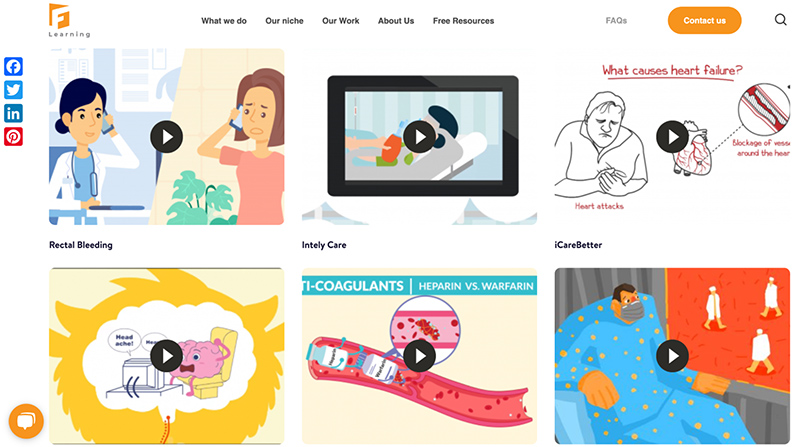
Character animation is often the better choice when viewers need to see people in context. It can show a customer facing a product problem, an employee responding to a risky situation, a patient navigating an unfamiliar experience, or a team member making a decision. Instead of presenting only the rule or process, the animation can make the situation concrete and give the audience a person to follow. That can be useful when recognition is part of the desired outcome: viewers should notice a familiar challenge, understand a perspective, or imagine how they would respond. Character animation does not have to be sentimental or playful. Its value comes from making actions, relationships, and consequences visible. Keep the story focused, because personality, movement, and setting can distract from the intended lesson if they do not serve it. In healthcare communication, this healthcare animation resource provides additional context for using animation across education, training, and communication needs.
The Business Question: What Should Viewers Understand and Do?
The business question is not “Which format looks better?” It is “What should viewers understand, remember, and do?” That shift protects a project from choosing animation for novelty alone. A marketing team may need viewers to grasp a value proposition and take the next step. A learning team may need them to recognize a situation and apply a process. A healthcare team may need them to understand information in a context that supports an appropriate decision. Those outcomes can require different visual languages, even when the subject is similar. One concise example makes the distinction practical: imagine explaining a new medical device. Motion graphics can show its components, workflow, and operating sequence; character animation can show a clinician or patient encountering the device in a realistic situation. If the main risk is misunderstanding the system, prioritize structure. If the main risk is failing to recognize the situation, prioritize the human experience. For learning-focused context, see how animation can support learning outcomes.
A Practical Framework for Choosing Between the Two Formats
Use this five-step framework for motion graphics or character animation. First, write the intended viewer action as a verb: compare, recognize, remember, decide, explain, or apply. Second, identify the main source of difficulty: missing structure, invisible relationships, unfamiliar behavior, emotional distance, or too much information. Third, choose the primary visual language. Select motion graphics when systems, sequence, labels, or relationships must lead; select character animation when people, situations, and responses must lead. Fourth, test the concept against the audience and setting, including technical knowledge, sensitivity, and viewing conditions. Fifth, review the storyboard without sound and ask whether the intended meaning remains clear. A hybrid can be appropriate when viewers need both a system and a situation, but assign each format a distinct job. If you are weighing production scope as well as communication fit, use this animation cost guide to inform the conversation. Then discuss your audience, message, and desired action before selecting a style.
Conclusion
Motion graphics vs character animation solve different communication problems, even when they appear in the same project. Choose motion graphics when viewers need to see structure, sequence, or relationships. Choose character animation when they need to recognize people, situations, choices, or consequences. When both needs matter, combine the formats deliberately rather than adding movement for its own sake. The strongest decision starts with the audience and the intended action: what must viewers understand, and what should they do next? Use that answer to guide the visual language, storyboard, and production conversation. If your team is deciding between the two, discuss the message and audience first, then select the format that makes understanding and application easier.