














Medical and healthcare solutions for patient education, clinical training, and high-stakes medical communication

F.Learning helps healthcare organizations explain complex medical information clearly and accurately — to patients, clinicians, and healthcare teams — in environments where misunderstanding affects care outcomes, clinical consistency, and patient safety.

We use animation, interactive learning media, and visual communication to help people understand medical knowledge correctly, apply it consistently, and act on it when it matters most.

Animation video production illustration
18 1 Medical and healthcare

Where understanding fails in real healthcare settings

Healthcare communication fails in ways that are distinct from other sectors. The challenge isn't just about making content engaging or accessible — it's about ensuring that the right person, at the right moment in their care or clinical workflow, receives an explanation they can act on correctly.

When a patient misunderstands a post-procedure care instruction, they don't always know they've misunderstood. When a clinical team follows a protocol inconsistently because staff internalized the training differently, the inconsistency is often invisible until something goes wrong. When a medical device is used incorrectly because the usage explanation was technically accurate but practically unclear, the error may not surface immediately.

Healthcare communication failures share a common thread. The consequences of misunderstanding are not inconvenience or inefficiency. They are clinical risk.

M2 e1772793276872 Medical and healthcare

Why healthcare organizations work with F.Learning

Medical information can be clinically correct and still be misunderstood.

That is why F.Learning does not treat healthcare communication as a standard content production task. We manage two requirements throughout the project: whether the information is medically accurate, and whether the intended audience can interpret and use it correctly.

We begin by working with clinical SMEs to identify the essential medical meaning, the decisions or actions the communication must support, and the points where visual or verbal explanations could create the wrong interpretation.

The source material is then restructured for its intended audience. Patient-facing communication may require plain-language sequencing, emotional sensitivity, and a clear connection between instructions and their purpose. Clinical education may require procedural rationale, decision cues, exceptions, and realistic variation. The medical source remains consistent, but the explanation changes according to who must use it.

Visuals are developed to reveal what words or static documentation leave implicit: anatomical relationships, changes over time, device mechanisms, procedural sequence, and the clinical logic connecting one action to the next.

Clinical SMEs validate the medical content. F.Learning is responsible for preserving that accuracy while making the explanation clear, visually coherent, and difficult to misinterpret.

This dual focus — clinical accuracy and communication clarity — is what distinguishes our approach to healthcare work.

Example case

Selected Examples

Where these challenges show up most often

Healthcare communication challenges fall into a few repeatable situations.

A10 Medical and healthcare

Patient Education

When patients feel confused or overwhelmed and don't follow through at home - because the explanation worked for the clinician, not for the patient receiving a diagnosis or care instruction for the first time.

15 Medical and healthcare

Medical & Healthcare Professional Education

When clinicians understand the content in training but the correct action breaks down under real clinical pressure, role variation, or unfamiliar patient presentations.

A8 Medical and healthcare

Medical Device & Pharma Product Explainers

When how-it-works, correct usage, and safety details are misunderstood across clinical teams, resellers, or end users - and the cost of that misunderstanding is patient or procedural risk.

Asset 1 Medical and healthcare

Clinical Safety & Compliance Training

When protocols exist and staff have completed the training, but interpretation varies across roles, shifts, and sites - creating inconsistency that documentation and in-person training alone can't resolve.

Not sure which situation fits your team best?

Many healthcare organizations start with one communication problem and uncover others along the way.

Choosing the right approach for your healthcare communication challenge

Different healthcare communication challenges call for different formats and review processes. Rather than one template, F.Learning selects the approach based on who the audience is and what they need to do with the information.

Not sure about the right approach for your project?

How F.Learning builds healthcare communication solutions

Healthcare projects require more than selecting an animation or learning format. The communication must preserve medical accuracy while adapting to the audience, the clinical context, and the moment in which the information will be used.

One medical source, designed for different audiences

Each audience version is scoped separately before scripting starts, not adapted after the fact.
We map exactly which terms need simplifying, which details must stay clinically precise, and where a shortcut in language could lead to the wrong action. A patient-facing script and a clinician-facing script may start from the identical medical source, but they're built as two separate documents from the first draft, not one script edited down for a general audience.

The visual approach is determined by what must be understood accurately.

Animation may be used to show anatomy, biological change, procedural sequence, or device mechanisms. Interactive scenarios may be used when staff need to practise clinical judgment. Quick-reference assets may be developed when correct action must be supported during a real workflow.

The format follows the medical communication requirement — not the other way around.

This isn't a single approval gate. Clinical SMEs and F.Learning review independently at script, storyboard, and animatic stage because a visual decision made after the script is approved (a camera angle, a pause, an animation speed) can quietly change what a viewer understands, even when every word on the page is still medically correct. Catching that requires someone checking for clarity at every stage, not just checking the words once.

Both reviews continue through scripting, storyboarding, and production, because a visual decision can alter meaning even when the original script is correct.

A healthcare resource may be used during a patient consultation, inside an LMS, before a procedure, within a patient portal, or as an on-the-job reference

Why animation works in healthcare communication

Healthcare information has specific properties that make it resistant to standard communication formats. Here is why animation is a functional necessity, not just an aesthetic choice:

01. Visualizing the Invisible

Many clinical processes are invisible - biological mechanisms, internal anatomical changes, or device interactions that happen beneath the surface.

The Solution:

Text can only describe them; animation shows them unfolding in the exact sequence and level of detail the audience needs.

Communication & Product Education
Training & Learning

02. Preserving Strict Sequence

Medical procedures are highly order-dependent. Small errors or steps performed out of sequence carry disproportionate consequences in healthcare environments.

The Solution:

Animation controls pacing and sequence in a way static formats cannot, guiding audiences safely without relying on strict reading discipline.

03. Overcoming Emotional Barriers

Patients managing fear, stress, or unfamiliarity often cannot process dense clinical language, regardless of how accurate it is.

The Solution:

Animation introduces difficult medical information in a tone that reduces anxiety and builds trust, making comprehension possible.

M9 1 e1772885680692 Medical and healthcare
M3 1 Medical and healthcare

04. Ensuring Universal Consistency

Healthcare information must be understood correctly by diverse groups - patients, clinicians, and stakeholders - across different contexts.

The Solution:

Animation provides a level of consistency and control that verbal explanations and static documents simply cannot reliably achieve.

F.Learning's workflow

pin Medical and healthcare

1. Align the clinical purpose and audience

We define what the communication must achieve, who will use it, where it will be used, and which medical requirements must remain unchanged.

pin Medical and healthcare

2. Map the medical content

With clinical SMEs, we identify the essential meaning, terminology, safety details, and areas where simplification or visualization could create misunderstanding.

pin Medical and healthcare

3. Build the explanation

We restructure the content for the intended audience, then develop the script, visual logic, storyboard, or interaction flow.

Patient-facing content prioritizes plain language and emotional sensitivity. Clinician-facing content may require procedural rationale, decision cues, and clinical variation.

pin Medical and healthcare

4. Produce and prepare for use

We develop and refine the final assets for their intended environment, including patient portals, LMS platforms, professional education, clinical workflows, or standalone delivery.

Clinical accuracy and communication clarity are reviewed throughout every phase. Clinical SMEs validate the medical content, while F.Learning ensures the structure, visuals, and language communicate the intended meaning clearly.

Where needed, we also prepare accessibility, localization, approved updates across versions, and reusable asset requirements.

Meet our beloved clients

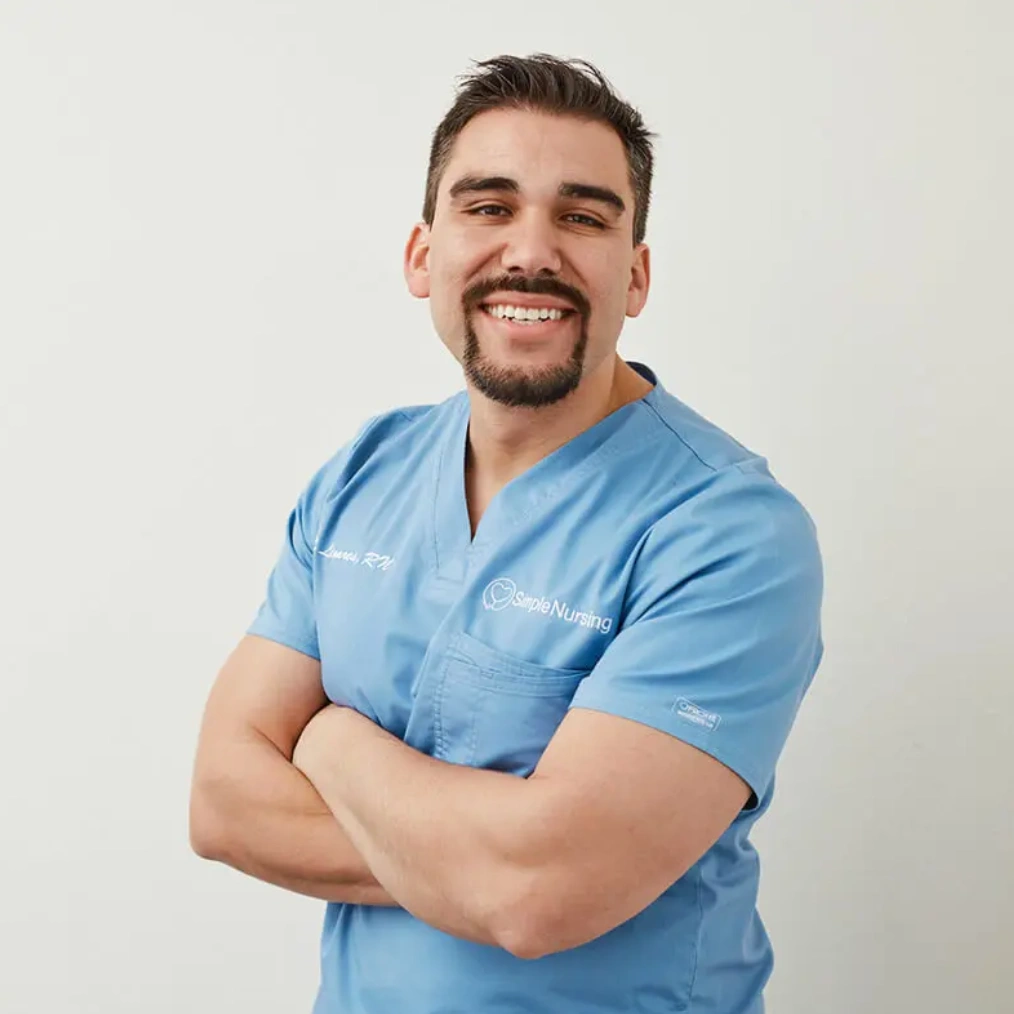
F. Learning team has been a pleasure to work with! Our nursing students absolutely love the colorful animation, seamless transitions, and engaging diagrams. We expect to reach a wider audience and grow our social media following of over 500,000 with the help of F learning. Being an educational company for over 7 years, it has been challenging to stay at the top of our game, but with these new engaging videos, I believe we will reach higher levels. Thank you, F. Learning.
Mike Linares Medical and healthcare

Mike Linares, RN, MSN

Founder of Simplenursing.com
It’s been such a pleasure working with you and the F.Learning team this year. We truly appreciate the incredible work you’ve done, and we look forward to working again next year.
Kylie Gagan RN BSN MHD Medical and healthcare

Kylie Gagan, RN, BSN, MHD

Director of Education at the Association of Migraine Disorders
F.Learning knew how to handle sensitive, high-stakes information with care. The visuals made complex content feel approachable, while still staying accurate and clear.
Amanda Gurruchaga Medical and healthcare

Amanda Gurruchaga

Head of Programmes at ShoutOutUK LTD

Frequently Asked Questions

Patient education, clinical onboarding and procedural training, medical device explanation, pharmaceutical communication, healthcare professional education, clinical safety and compliance training, and any environment where complex medical information needs to be understood correctly by patients, clinicians, or healthcare teams.

Clinical accuracy is maintained through close collaboration with healthcare SMEs and subject matter review at script, storyboard, and animation stages. We treat accuracy and clarity as separate review criteria — because content that is medically correct but visually confusing still produces the wrong understanding.

Different audiences require different approaches — different terminology, different visual register, different level of detail, and different emotional tone. We scope patient-facing and clinician-facing communication separately, even when they draw from the same source material, and develop each for the audience that needs to use it.

Format depends on the communication goal and audience. 2D animation is most effective for accessible patient education and clinical process explanation. 3D is used for anatomy visualization, medical device mechanisms, and spatial relationships that 2D cannot represent accurately. Scenario-based animation is used for clinical decision-making and behavioral training. We recommend a format after understanding the specific communication challenge.

Yes. Deliverables are prepared for the specified deployment environment — LMS integration, SCORM packaging, patient portal embedding, or standalone delivery depending on the project.

Tone, pacing, visual style, and language are all calibrated for the emotional context of the audience and topic. Patient-facing content on difficult diagnoses or sensitive procedures requires a different approach than clinician training — we address this at the scripting and visual direction stage, not as an afterthought.

We have supported hospitals, healthcare providers, medtech and pharmaceutical companies, clinical training departments, nursing education platforms, and patient advocacy organizations. Some of our long-term clients include Simple Nursing, IntelyCare, and iCareBetter, alongside NHS-affiliated teams and healthcare professionals across multiple specialties.

icon1 Medical and healthcare
In healthcare, unclear communication isn't just a gap in understanding. It's a gap in care.

If patients, clinicians, or healthcare teams are receiving information but not acting on it correctly — the explanation needs to do more than deliver. That's the problem F.Learning is built to solve.

Try a Free 30-minute Consultation

Want Custom Animated Videos or Boosting Your Learning? We’re Here for You!