
Clinical safety training for protocols that have to hold on the night shift, not just in the assessment
You’ll talk to a learning designer about one protocol where your incidents cluster.
We create scenario-based learning media that helps clinical teams follow safety protocols correctly under real pressure, so safety stays consistent across shifts, roles, and sites.
Built for nurse educators, clinical governance, and patient safety leads responsible for protocols that have to hold on every shift.


The training measured the assessment. Patient safety depends on the night shift
Healthcare organizations already have safety infrastructure: documented protocols, mandatory training, LMS assessments, audit processes, and regulatory requirements.
It breaks down when protocols have to hold under real clinical conditions: high patient volume, a short-staffed shift, an interruption at the wrong moment, and a step that has been skipped before without anything going wrong.
Around 1 in 10 patients is harmed in health care, and more than half of that harm is preventable. (World Health Organization, Patient Safety fact sheet, 2023) WHO attributes most of it to failures of systems and processes rather than individual carelessness. That’s the space safety training works in: the conditions under which a protocol everyone knows stops being followed.
Many programs produce high completion rates and passing scores, and still don’t prevent the deviations that cause incidents. The training demonstrated knowledge. The behaviour didn’t follow.
What staff are still unsure about after mandatory training
- What deviating from a step actually risks for a real patient
- How correct behaviour looks on a shift with different staffing and pressure
- What to do when a situation doesn't match the training scenario
What clinical safety training has to do, and whether mandatory e-learning, a safety huddle, or audit and feedback delivers it
The goal isn’t a completion rate. It’s the same protocol followed correctly on the quietest day shift and the busiest night.
| F.Learning built from where your deviations actually happen | Mandatory annual e-learning | The policy on the intranet | A safety huddle or briefing | Audit and feedback | |
|---|---|---|---|---|---|
| Shows what the step prevents? | Strong: the consequence, made visible when the shortcut tempts | Weak: states the requirement | Weak: states the requirement | Strong: strongest when a recent case is the example | Partly: shows numbers, not the patient |
| Built for the conditions where deviation happens? | Strong: from the deviation patterns on your wards | Weak: generic by design | Weak: no | Strong: local and current | Partly: finds where, not why |
| Same standard on every shift? | Strong: one standard, every ward | Strong: consistent | Strong: consistent as a record | Weak: varies with who runs it | Strong: consistent measurement |
| Produces evidence for accreditation? | Partly: SCORM and tracking, to confirm | Strong: tracking built in | Strong: the policy itself | Weak: rarely recorded | Strong: what regulators ask for |
| Cost per staff member? | Weak: highest upfront, flat after | Strong: lowest per seat | Strong: near zero | Strong: low, but recurring | Partly: staff time to run |
| Best when | staff pass the training and still deviate | a mandatory topic must be covered and tracked | you need the written requirement on record | this ward had an incident this week | you need to measure actual compliance |
👈 Swipe horizontally to view full table 👉
In short: Mandatory e-learning is the cheapest way to cover a topic and prove it. Audit is what shows the real compliance rate. A huddle after a real incident is the most powerful safety conversation there is. F.Learning is strongest at the step that has never visibly caused harm, and therefore stopped feeling like a deviation.
Safety protocol
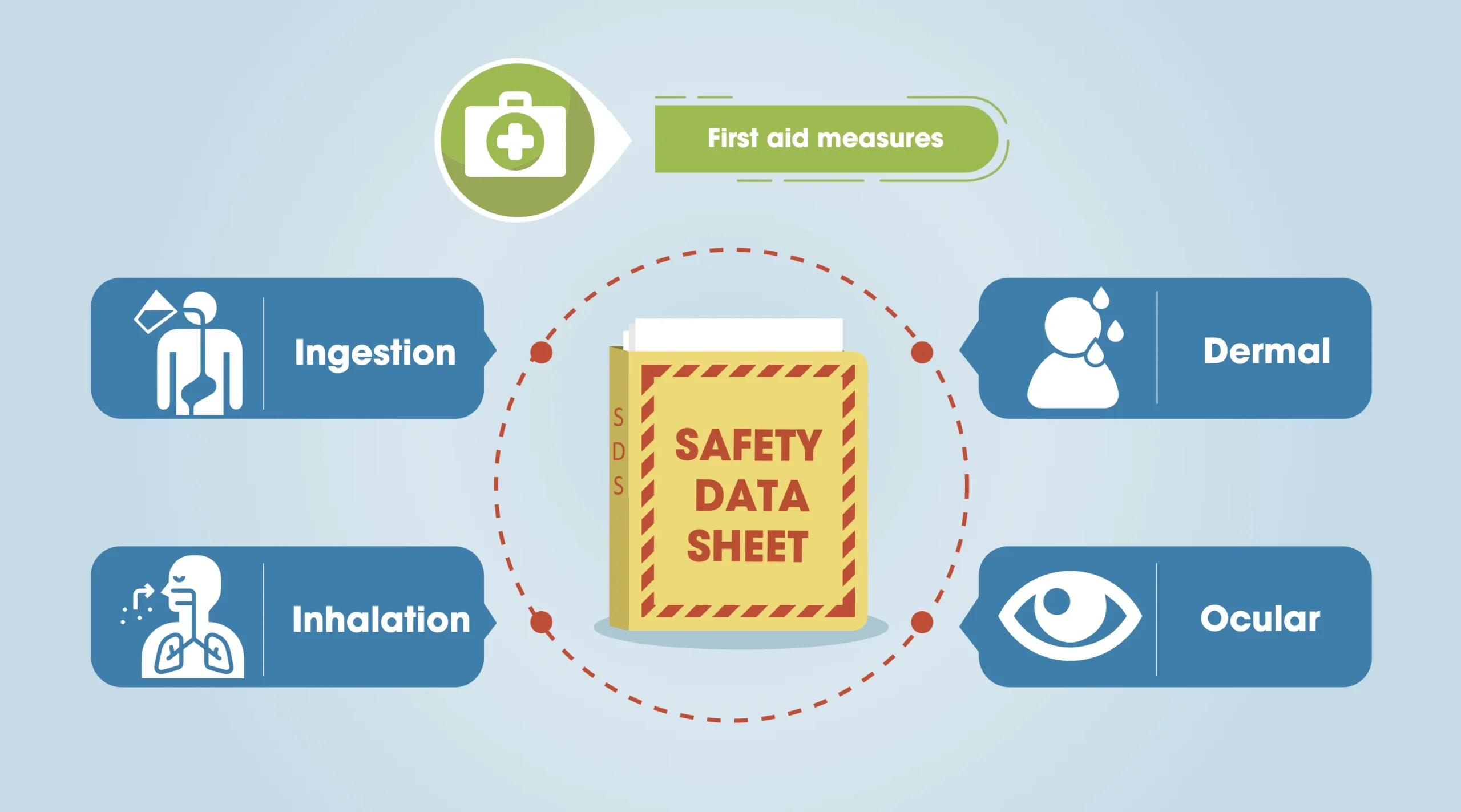
Safety protocol in a specific situation
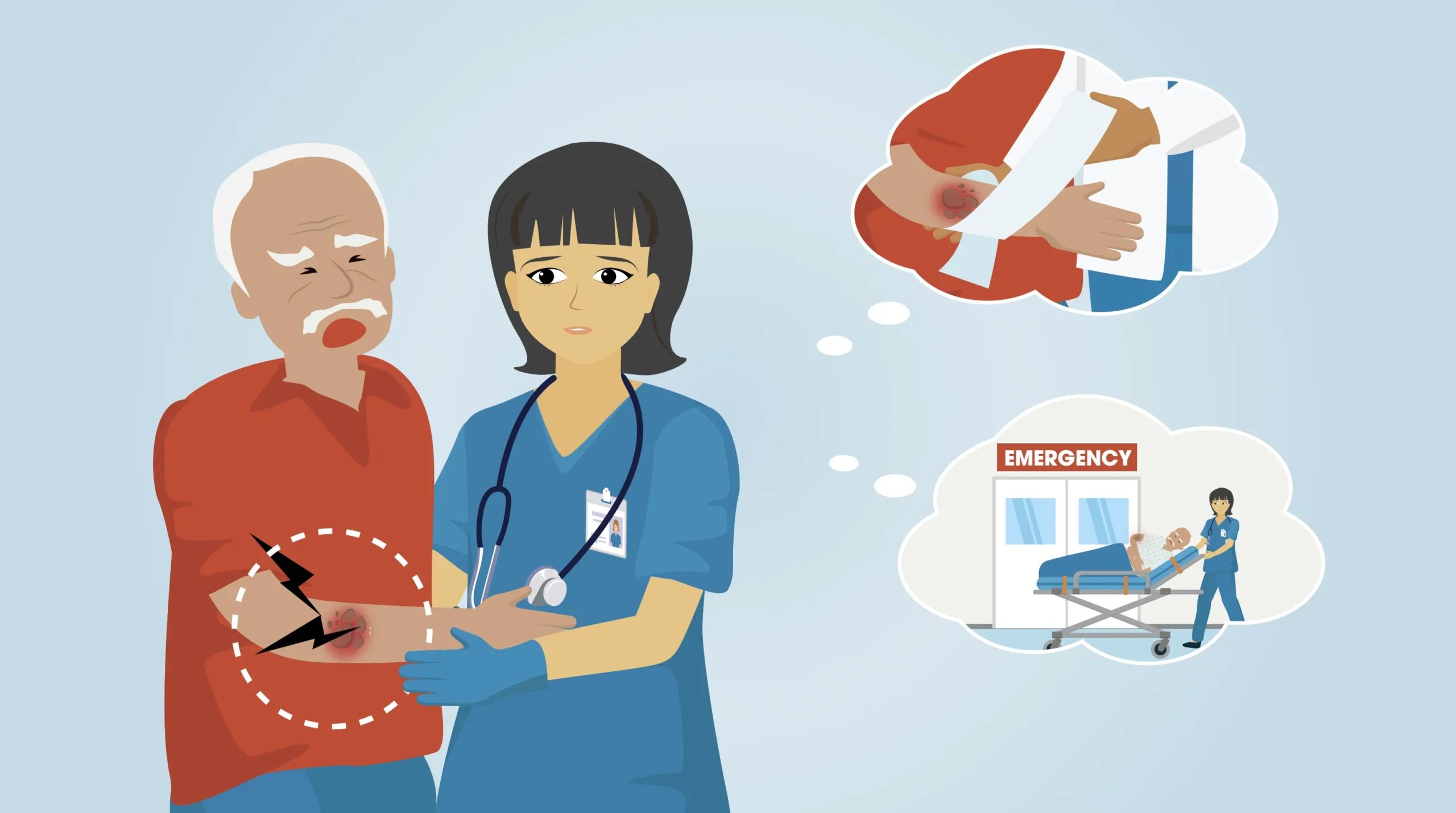
The same protocol, as assessed and as practised. The first checks that staff know the steps. The second shows the moment on a busy shift when one of them gets dropped.
Where this isn’t the right answer
If the requirement is evidence that a mandatory topic was covered, an existing module does that faster and for far less.
This work earns its cost when staff already know the protocol and still deviate under pressure, and the cost of one deviation is patient harm.
What F.Learning designs for: the step that has never gone wrong
Healthcare safety research has a name for it: the normalization of deviance. A step gets skipped under pressure, and nothing happens. It gets skipped again. Over time the shortcut stops feeling like a deviation at all, because every time so far it’s been fine.
That’s why completion rates and incident rates can move independently. The training taught the protocol. It never addressed the conditions under which the protocol quietly stopped being followed.
So we start from where deviation actually happens in your wards: which steps, on which shifts, under what pressure. The training is built around those conditions, and around making the consequence visible at the moment the shortcut is tempting.
Training usually measures the first two boxes. Patients are exposed to the last one.
Selected example
IntelyCare: clinical safety procedures for nurses, at scale
A healthcare staffing company needed nurses to follow clinical safety procedures correctly as training moved online fast. Formal, text-heavy material was hard to absorb and easy to forget under pressure.
We redesigned the training into clear animation showing the correct steps and sequence for safe practice, what goes wrong when a step is missed, and the points learners most often misunderstand in real work.
Used to train nurses across the United States
20 minutes of training animation produced in one month
Result
IntelyCare gained a clearer, more consistent way to deliver fire and life safety training, helping staff connect safety rules to the exact actions required in real situations and review the same procedures across facilities and learning formats.
Where this applies
- High-volume wards: Where time pressure makes steps easiest to drop.
- Multi-shift alignment: The same standard across shifts, roles, and departments.
- New and float staff: Correct habits before they inherit a team's workarounds.
- Regulatory & accreditation: Dense requirements staff can actually apply.
Specific applications in each area
- Wards: infection control, medication safety, patient handling, observation standards, hand hygiene and PPE
- Alignment: shift handoffs, cross-department workflows, incident reporting
- New staff: safety induction, float pool and agency staff, rotating trainees
- Regulatory: accreditation preparation, regulatory updates, audit readiness
What we build, and when
Formats are chosen by the specific failure being addressed.
Scenario-based safety animation
Used when staff need to see the conditions under which compliance breaks, and the consequence that makes a step non-negotiable.
Interactive practice and checks
Used when staff need to rehearse the decision, not just watch it.
Visual protocol references
Used at the point of care: job aids and visual SOPs staff can check mid-shift.
How F.Learning builds it: four steps, 6 to 10 weeks, starting from your incident data
Step 1
Find where deviation actually happens
With your clinical and governance teams, we map which steps get skipped, on which shifts, under what pressure, and why.
Step 2
Make the consequence visible
Each critical step is structured around what it prevents for a real patient.
Step 3
Build scenarios for the hardest conditions
Practice is built for the short-staffed night, not the ideal day.
Step 4
Produce, with separate clinical and governance review
Your clinical team reviews accuracy; your governance team reviews compliance requirements. We review for whether staff can still follow it.
Clinical and regulatory sign-off sits with your team.
Related insight
More on patient safety


Related services & solutions
Related Training Solutions
Related Services
Frequently asked questions
What types of clinical safety training does F.Learning support?
Our completion rates are high. Why do deviations still happen?
Who signs off on clinical accuracy?
Can training be updated when protocols change?
Can it integrate with our LMS or compliance system?
How long does a project take?

Pick one protocol where your incidents cluster. We'll map where and when it breaks, before anyone talks about production.
30 minutes with a learning designer. No deck required.