
Medical device and pharma animation for one mechanism explained to four different audiences
You’ll talk to a learning designer about one product and the audiences who misread it.
We create medically accurate visual explainers that help patients, clinicians, sales teams, and payers understand how a device or treatment works, at the depth each of them needs.
Built for medical affairs, product marketing, and commercial teams at medtech and pharma companies explaining one product to very different audiences.






The mechanism is the same for every audience. What each one needs to see of it is not
Medical product teams already produce substantial communication: technical documentation, clinical training materials, product decks, patient leaflets, and instructions for use.
It breaks down when the same product has to create accurate understanding in audiences with completely different starting points. A patient, a prescriber, a sales rep, and a procurement team leave with different ideas of how the product works, what makes it different, and when to use it.
Count the audiences your product has to be explained to, and how many people explain it to each one. Every rep, every trainer, every clinician who passes it on to a patient is another version of the explanation.
Most medical product communication makes the outcome clear and leaves the mechanism invisible. That’s where each audience fills in the gap differently.
Where different audiences end up with different understandings
- How the product actually works at the mechanism level
- What makes it clinically different from existing alternatives
- When and how to use it correctly in real conditions
- What to expect, and what to do if something varies
What a medical product explanation has to do, and whether the IFU, a sales detail, or a KOL talk delivers it
The goal isn’t a better product video. It’s every audience understanding the same mechanism correctly, at the depth they need.
| F.Learning one accurate core, a version per audience | The IFU or product monograph | A sales rep detail or demo | A slide deck or sales aid | A conference or KOL talk | |
|---|---|---|---|---|---|
| Makes the mechanism visible? | Strong: shown, in 3D where spatial detail matters | Weak: described precisely | Partly: as well as the rep explains it | Partly: a diagram and an outcome | Partly: strong with good visuals |
| Right depth for each audience? | Strong: one accurate core, a separate version per audience | Weak: written for one reader | Strong: adapts to one prescriber, one conversation at a time | Weak: usually one version | Partly: pitched at the room |
| Same story across reps and markets? | Strong: one core, reused everywhere | Strong: consistent as a record | Weak: varies with every rep | Strong: consistent, if used | Weak: varies with every speaker |
| Credible with clinicians? | Strong: accurate, reviewed by your team | Strong: the regulated record | Partly: depends on the rep | Weak: often read as marketing | Strong: peer credibility is hard to match |
| Cost to reach each audience? | Partly: highest upfront, reusable after | Partly: required anyway | Weak: highest per clinician | Strong: lowest | Partly: high, and hard to repeat |
| Best when | one product, several audiences, one mechanism | the regulator requires it | a named prescriber has specific questions | the rep needs something to leave behind | clinicians trust a peer more than a brand |
👈 Swipe horizontally to view full table 👉
In short: The IFU stays the regulated record. A rep or a respected peer is more persuasive with one named prescriber than any animation. A sales aid is cheapest. F.Learning is strongest when the same mechanism has to be understood correctly by patients, clinicians, sales teams and payers, without four separate versions drifting apart.
For Doctor
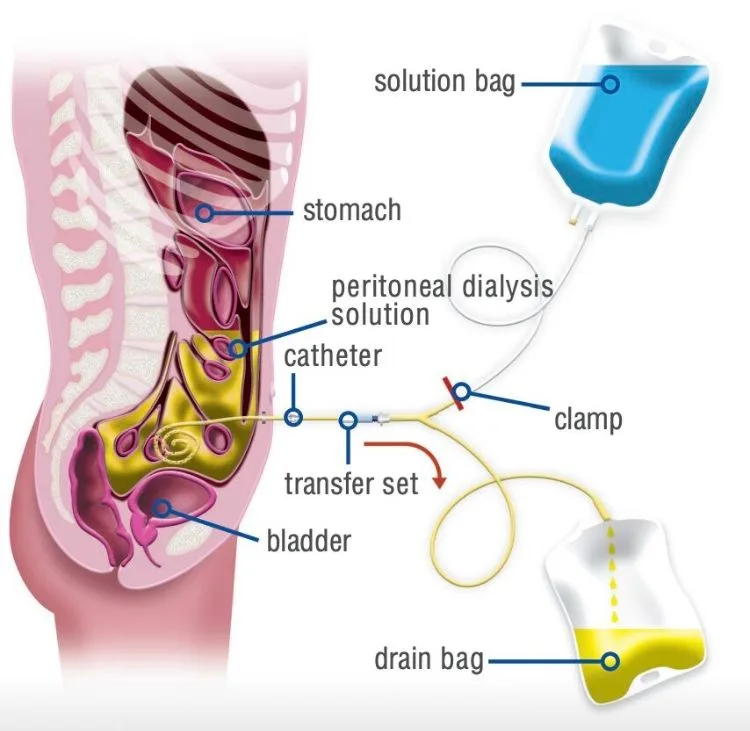
For Patient
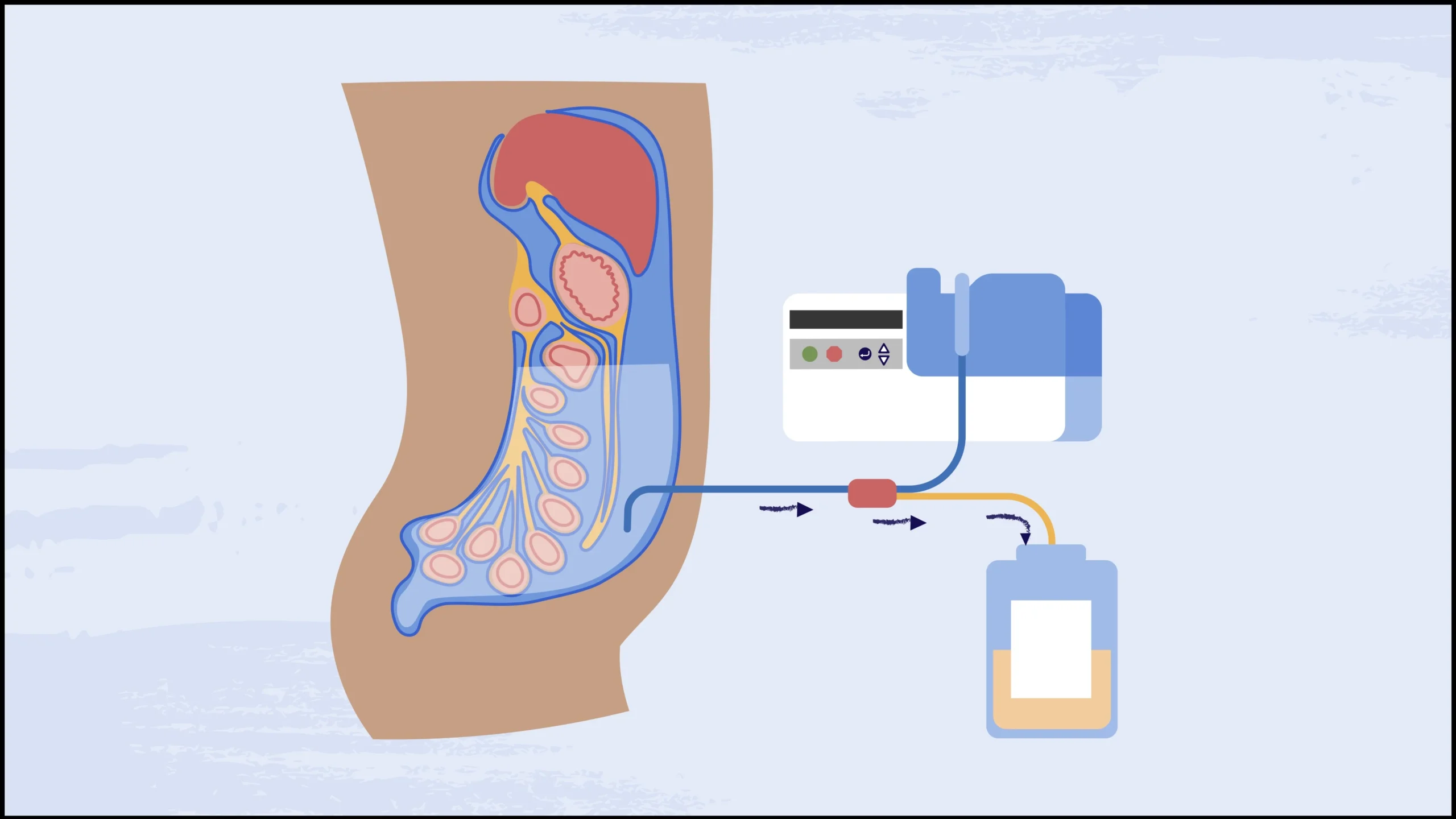
One mechanism, two audiences. The facts are identical. What each version shows first, and how far it goes, is not.
Where this isn’t the right answer
If learners need volume of practice, a question bank does that better than anything we build, and we will usually recommend running both.
This work earns its cost when the same misconceptions appear across thousands of learners and adding more content isn’t fixing them.
What F.Learning designs for:
One mechanism, four audiences
A medical product is explained to at least four audiences who start in completely different places: a patient who needs to trust it, a clinician who needs to recommend it, a sales team who needs to explain it the same way every time, and a payer who needs to justify it.
The mechanism is identical for all four. What each of them needs to see of it is not. A patient explainer at prescriber depth overwhelms; a sales aid at patient depth loses the clinician in the first thirty seconds.
So we build one accurate core, reviewed once by your medical team, and a separate explanation structure on top of it for each audience. Every version stays true to the same mechanism, and none has to be rebuilt when another changes.
Scenarios start here
One accurate mechanism
Patient: can i trust it?
Clinician: Should I recommend it?
Sales: can I explain it the same way?
Payer: can I justify it?
Four versions, one mechanism
None rebuilt when another changes
One core, reviewed once. Four versions, each built for where its audience starts.
Selected example
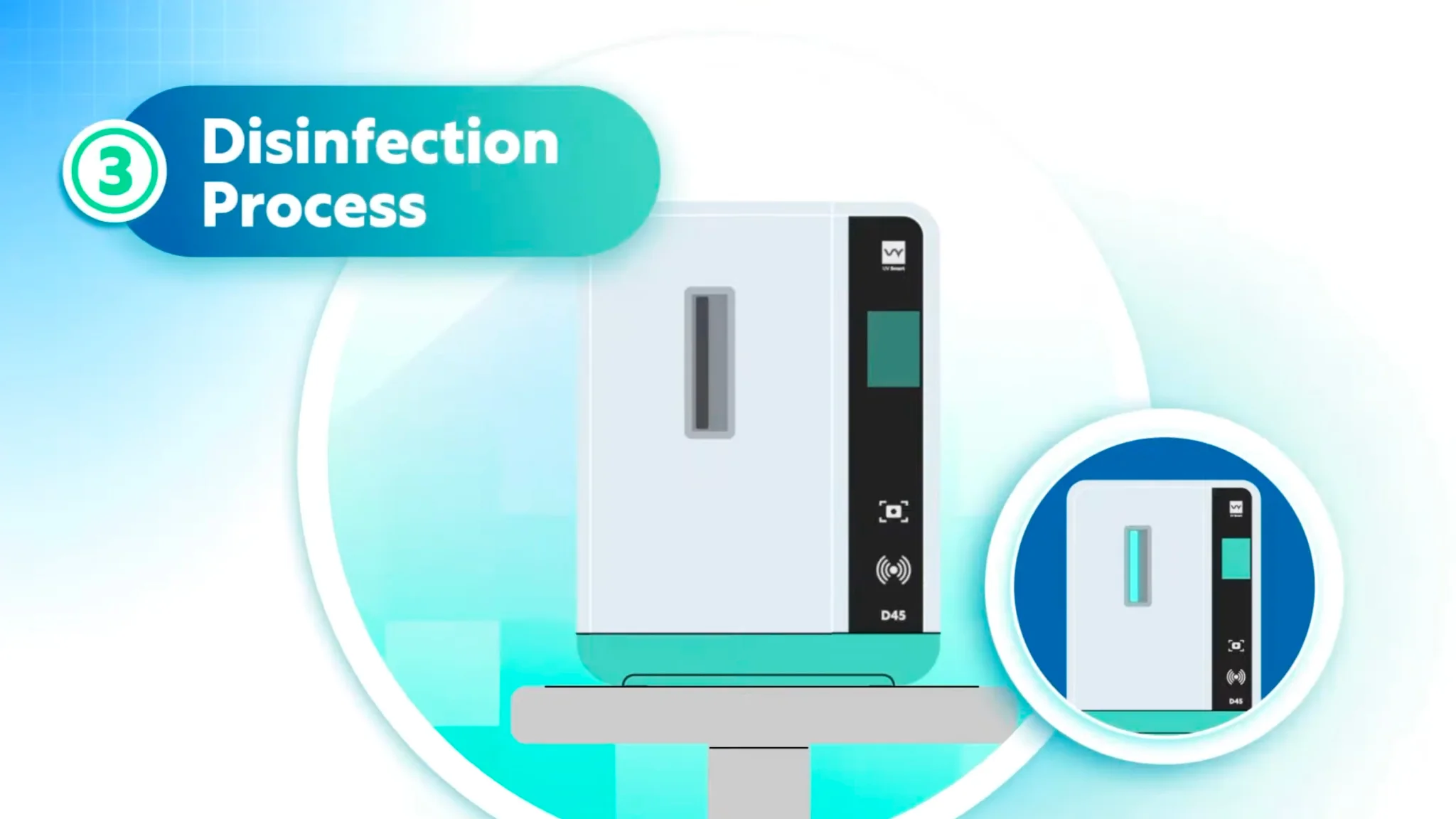
UV Smart: a disinfection device, explained for clinicians and broader audiences
A medical device company needed to explain how their UV disinfection solution works, clearly enough for healthcare professionals and simply enough for broader audiences, without losing technical accuracy.
We built a visual explainer showing what the device does and where it’s used, how the mechanism works step by step, and the benefits viewers should remember.
- One video reused across web, sales, and conference channels
- A more consistent product explanation across channels
Result
UV Smart gained one clearer, reusable product explanation across channels, helping healthcare professionals and resellers understand how the D60 and its accessories fit together and what value they bring in practice. Pasted markdown
“F.Learning Studio helped us explain the D60 and its accessories with clarity and impact. Their visuals made it easier for healthcare professionals and resellers to understand the value of our product.”
Tommaso Allegri, Marketing Specialist at UV Smart
Where this applies
- Patient-facing: Device use at home, procedure preparation, what to expect.
- Clinical & HCP: Mechanism of action, device introduction, prescriber education.
- Commercial: Sales enablement, launch, distributor education.
- Payer & procurement: Justifying the product to people who fund it.
Specific applications in each area
- Patient: device usage, procedure preparation, post-treatment guidance
- Clinical: mechanism of action, clinical device training, prescriber education
- Commercial: sales and marketing explainers, conference content, distributor education
- Payer: payer and procurement communication, institutional communication
What we build, & when
Formats are chosen by the mechanism, the audience, and the channel.
Mechanism animation
Used when audiences need to see what happens inside a device or the body: interactions, spatial relationships, and processes that can’t be observed.
Patient-friendly explainer
Used when a patient needs to understand a product or procedure well enough to prepare for it or use it correctly.
Visual product support materials
Used when the explanation has to travel beyond video, through sales aids, reference guides, and conference materials.
How F.Learning builds it: four steps, 6 to 10 weeks, one core for every audience
Step 1
Map the audiences and where each misreads the product
What each audience needs to understand, at what depth, and where the current explanation creates misconceptions.
Step 2
Build one accurate core
The mechanism is sequenced and reviewed once with your medical team, as the base every version draws from.
Step 3
Structure a version for each audience
Patient, clinical, commercial, and payer versions follow different explanation logic, on the same mechanism.
Step 4
Produce and review
Your team reviews for scientific and clinical accuracy. We review for clarity and for consistency across every version.
Clinical and regulatory sign-off sits with your team.
Related insight
More on medical product communication







Related services & solutions
Related Training Solutions
Frequently asked questions
What types of medical device and pharma communication does F.Learning support?
How do you explain the same product to different audiences?
Who signs off on clinical accuracy?
Can you work within our medical, legal, and regulatory review?
When is 3D necessary instead of 2D?
How long does a project take?
Most medical device or pharma product explainers take around 6–10 weeks from kickoff to final delivery. Simpler projects may move faster, while complex 3D visualization or additional medical, legal, and regulatory review rounds can extend the timeline.
The final schedule depends mainly on the scientific or product complexity, the visual assets that need to be created, and the review process.

Pick one product your audiences explain differently from each other. We'll map where each of them starts, before anyone talks about production.
30 minutes with a learning designer. No deck required.