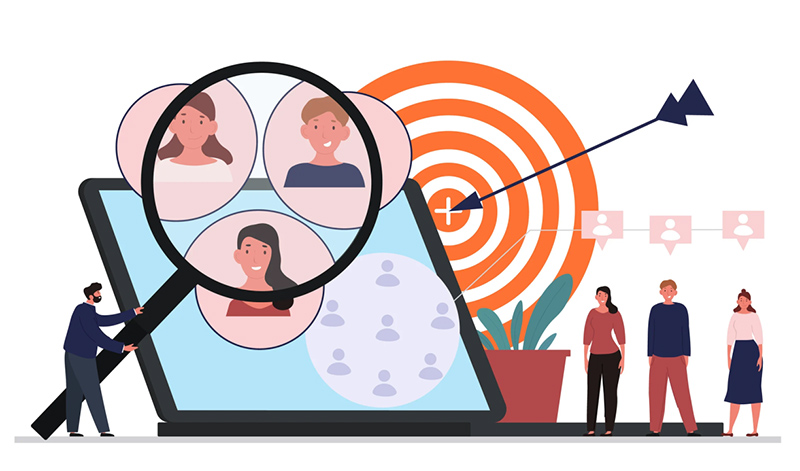

Learning content design vs animation production is not a choice between two competing creative services. It is a distinction between building understanding and making that understanding visible. Learning content design identifies the audience, the performance context, the mental model to develop, and the decisions or behaviors the learner must eventually handle. Animation production then translates those decisions into visual structure, motion, pacing, narration, and sound. This makes production valuable, but not sufficient on its own. A training video can be completed, attractive, and technically sound while still failing to help people apply anything at work. The practical question for a commissioning team is therefore not simply, “Can this studio make an animation?” It is, “What learning design will the animation execute?” A design-led eLearning content development process helps establish that answer before visual production begins.
What Learning Content Design Includes
Learning content design is the instructional and cognitive discipline that connects information with performance. It starts by examining what the audience already knows, where misunderstandings are likely, and which mental model will help people interpret a situation correctly. From there, the designer defines objectives, selects essential content, sequences ideas, creates examples, and decides where practice, feedback, assessment, and reinforcement belong. The work also determines what to omit. A subject-matter expert may provide accurate material, but accuracy alone does not establish relevance, comprehension, or transfer. Nor does converting a document into a script automatically create a learning experience. Effective design keeps the eventual work behavior in view: what should a learner notice, decide, explain, or perform after the content? That is why learning content design must address retention, transfer, and application rather than content delivery alone.

What Animation Production Includes
Animation production is the visual storytelling and asset-creation discipline that gives a learning concept an observable form. Its scope can include visual development, style direction, storyboards, illustration, character or technical assets, 2D or 3D motion, voiceover, sound, editing, versioning, and technical delivery. Production decides how an idea unfolds over time and how viewers’ attention moves through a scene. It can show sequence, scale, interaction, transformation, and relationships that are difficult to communicate with text alone. However, visual movement does not automatically create understanding. The production team needs a defined audience, objective, content hierarchy, and performance context to make appropriate choices about emphasis and pacing. A video production approach for eLearning training can strengthen communication when those decisions are already clear; it cannot replace them.
The Core Difference: Designing Understanding vs Executing Communication
The core difference can be stated as two questions. Learning content design asks: what must this audience understand and do in a real situation? Animation production asks: how can that structure be communicated clearly through visuals, movement, timing, sound, and narrative? Design owns audience context, mental models, objectives, transfer, practice, and behavior change. Production owns visual clarity, attention, pacing, narrative execution, asset quality, and delivery consistency. Design outputs may include an audience analysis, learning architecture, script logic, interaction plan, assessment approach, and performance criteria. Production outputs may include visual concepts, storyboards, animated scenes, voiceover, edits, and final learning assets. These responsibilities overlap during review, but they should not be confused. When a training video fails because learners cannot recognize a risk or choose an action, the problem is usually not solved by smoother motion or a more appealing style.

Where the Design-to-Production Handoff Breaks
The design-to-production handoff breaks when the production brief contains information but not a learning problem. An untested assumption about the audience can produce examples that feel obvious to experts and confusing to beginners. A script may list facts without identifying the decisions learners must make, while an SME-led explanation may preserve technical detail without instructional prioritization. A storyboard can also map scenes, transitions, and camera movements without showing how understanding develops. Late discovery of technical, accessibility, localization, or asset constraints creates another failure point: important learning content is cut after the logic has already been approved. The result may be attractive animation with overloaded narration, inaccurate simplification, weak context, or visuals that do not match the work situation. A stronger handoff records the audience risk, mental model, behavior, visual purpose, and review criteria before production begins.
When Production Constraints Should Influence Learning Design
Production constraints should influence learning design before scripting, not appear as surprises after approval. Duration limits can force prioritization; reusable characters or environments can shape examples; accessibility requirements can affect visual density, captions, contrast, narration, and interaction choices. Localization may require room for translated text and adaptable on-screen graphics. The choice between static graphics, whiteboard treatment, live action, 2D, or 3D should follow the thinking task rather than fashion. A process or system may need animation to reveal sequence, while a comparison may be clearer as a static graphic. These constraints are useful when they help the team decide what the learner truly needs to see, hear, and practice. They become harmful when they silently remove the objective. Production should therefore challenge scope early, while learning design protects the intended performance outcome.
A Decision Framework: In-House Design, Outsourced Production, or an Integrated Partner
Use in-house design when your team understands the audience, owns a defensible learning strategy, and can define objectives, practice, and transfer, but lacks animation capacity. Outsource production when the learning design, scripts, visual direction, and review process are already repeatable and the main need is reliable asset creation. Choose an integrated partner when the subject matter is complex, audience risks are uncertain, or the organization needs design and production decisions resolved together. Before commissioning, ask who owns the learning architecture, how SMEs will be involved, when storyboard reviews occur, how accessibility and localization are handled, and what evidence will determine whether revisions are needed. Also ask whether the vendor distinguishes a learning review from a visual review. A partner should be able to explain not only what it will produce, but how the proposed asset will support understanding and application.
Quality Checks: Learning Effectiveness Before Visual Polish
Run learning checks before judging visual polish. Confirm that the audience is specific, the mental model is explicit, the objective describes a meaningful performance, and the content reflects real decisions or situations. Check whether learners have opportunities to recognize, practice, receive feedback, and transfer the idea beyond the video. Then run production checks for visual accuracy, hierarchy, legibility, pacing, narration-visual alignment, consistency, accessibility, localization readiness, technical quality, and version control. The animation quality evaluation guide can support a structured review of content, design, and motion, but the commissioning team still needs its own learning criteria. The final test is simple: before discussing style, can everyone explain what the learner must understand, recognize, decide, and do? If not, production review is starting too early.
Conclusion
Learning content design builds the logic that makes understanding possible; animation production makes that logic visible, memorable, and usable through visual communication. Treating animation as the learning strategy reverses that relationship and increases the risk of polished but ineffective content. Before requesting a script, storyboard, or production estimate, identify the audience, mental model, performance context, decision points, and evidence of application. Then decide whether your team needs production support, design support, or an integrated partner. A design and production assessment can reveal whether the asset is ready to make—or whether the learning problem needs to be solved first.