
When patients don't understand after-care, they come back - and under HRRP, that costs your hospital real Medicare dollars. F builds your unit a custom animated video series that starts teaching from day one, not the last hour before discharge.

Tell us the unit and the condition. We'll walk your protocol and show you what a script built from it looks like. No cost, nothing committed.
of medical information is forgotten immediately (Kessels, JR Soc Med 2003)
of HRRP hospitals are paying a readmission penalty in FY2026
All 6 HRRP conditions fully mapped
Readmission within 30 days isn't rare. It's routine, and CMS has been pricing it since 2012. Some of that is genuinely out of anyone's control. A meaningful share isn't - it traces back to something as basic as what a patient actually understood before they walked out the door.

Discharge lands when a patient is most tired, still adjusting to new medication, and thinking mainly about getting home. There's no cognitive room left for something new, no matter how clearly it's explained.

The instructions can be well-written and still fail, because the problem was never the wording. It was that there was only ever one chance to say it.
The number that should worry a discharge program isn’t the forgetting rate. It’s what sits underneath it: of the information a patient does remember, roughly half is remembered incorrectly. Not forgotten — misremembered, and acted on at home with confidence.
Understanding isn't built in one sitting. It's built through repetition spread over time. The library gets built once - scripted from your unit's protocol, signed off by your clinical team - then runs automatically for every patient.
A short video, one topic, two minutes or less, matched to their condition. On the screen in the room if your setup allows, on the patient’s own phone if it doesn’t.
By discharge, the patient and family have seen the basics more than once.
The conversation confirms what they already know instead of teaching it cold.
A QR code that keeps working: The same content goes home, so a caregiver at 11pm can find the answer instead of reconstructing it from memory.
Printed take-home summaries: For every topic, for the patients and caregivers who won’t use a QR code — a large share of the Medicare population.
We don't approve clinical content. Your team does. That's deliberate. Ours is reviewed by the clinicians who wrote the protocol it came from, on every script, before a frame is produced. We bring instructional design and production. You bring the medicine.
What that costs you, stated plainly:
Two review rounds per script, designed to take minutes rather than hours. A Core package of eight topics typically runs two to three hours of clinical time in total, spread across a few weeks.

What we've built before
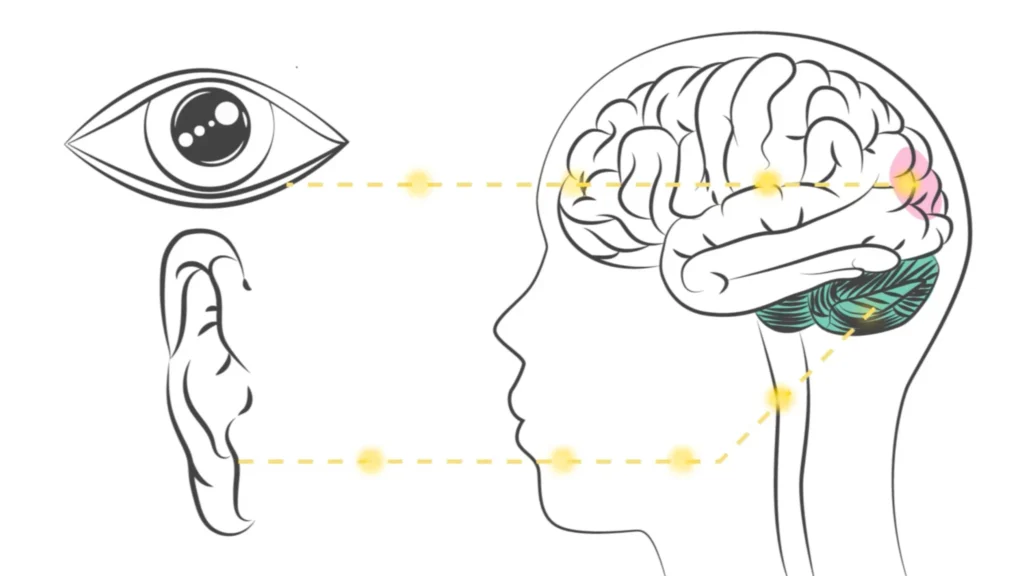
Can you deliver a full series on schedule?
Association of Migraine Disorders
Tell us the unit and the condition. We'll walk your protocol and show you what a script built from it looks like. No cost, nothing committed.
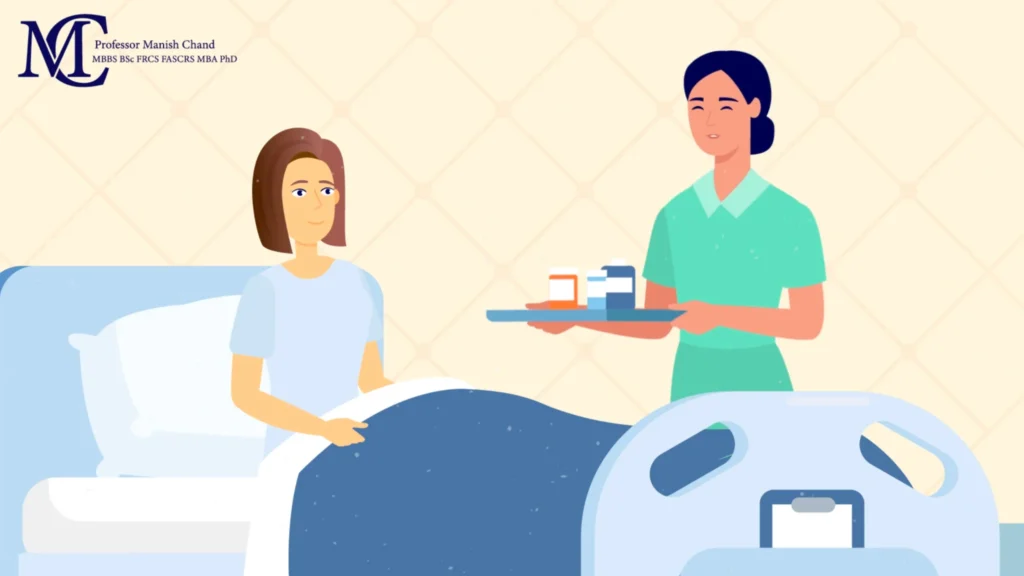
Can you work with a clinician who cares how they're represented?
Dr. Manish Chand, Colorectal Surgeon
Turned fear of machinery into pre-consultation video keeping the surgeon at the centre.
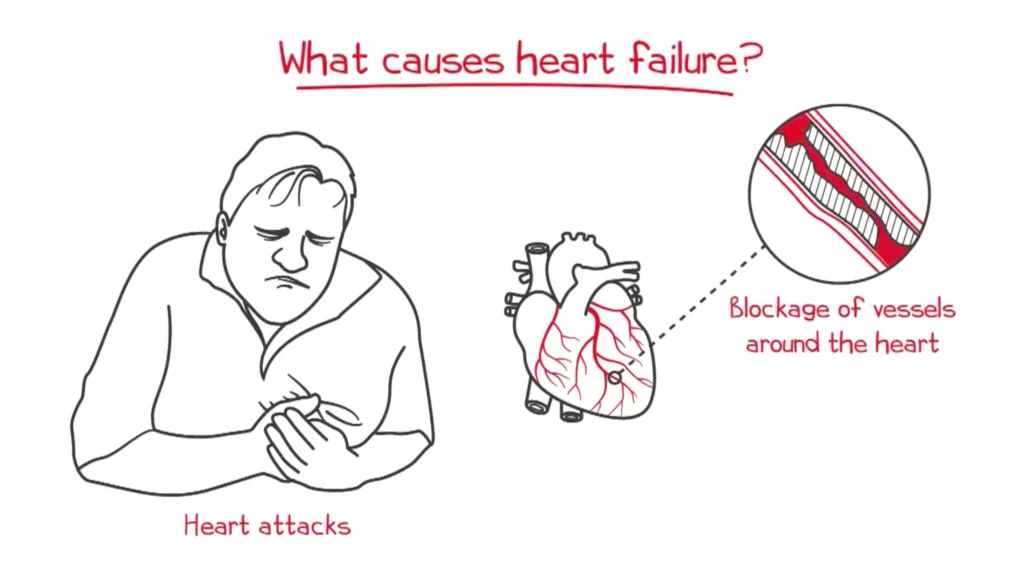
Can you handle a condition that's genuinely hard to explain?
iCareBetter
Patient-facing video on a complex, frequently misunderstood chronic condition.
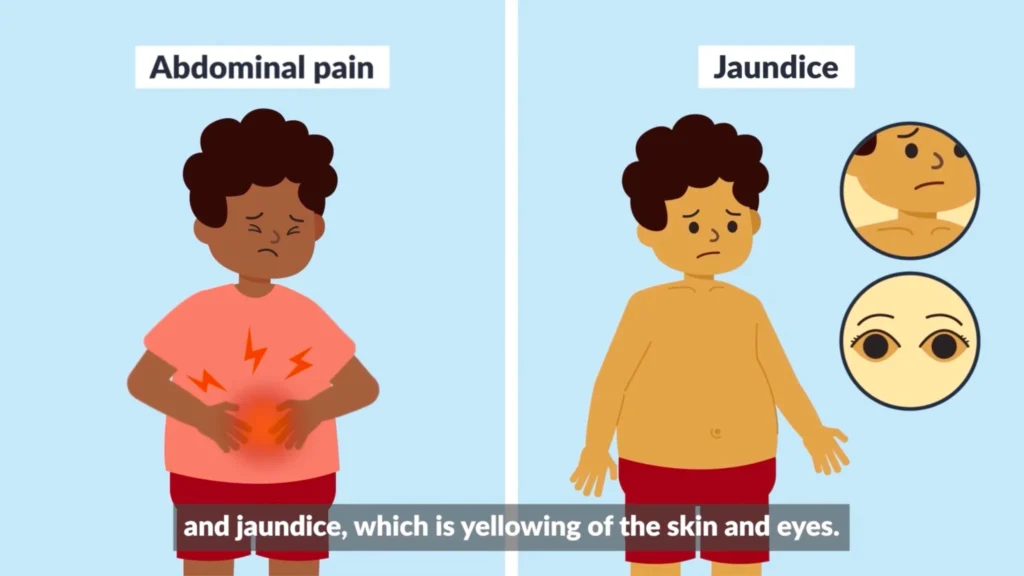
Can you explain a real medical condition to kids without it turning into a cartoon or a lecture?
Stanford Medicine Children's Health
A plain-language explainer on how the liver works, one part of a multi-video patient-education series for Stanford's pediatric care team.
The most common production mistake is selecting a media format - animation, video, interactive module - before identifying what type of knowledge the asset needs to transfer. Format is a downstream decision. Content type is the upstream one that controls it.
What the evidence supports
Structured, repeated, individualised discharge education is the mechanism behind the strongest results in this field – Project RED (Jack et al., Annals of Internal Medicine, 2009) cut 30-day hospital utilisation by about 30%, and AHRQ built a national toolkit on it. Video-based patient education consistently improves patient knowledge and self-care.
What it doesn't
No one has shown video alone reduces readmissions. Project RED was a full programme – discharge advocates, pharmacist calls, scheduled follow-up. At least one heart-failure video study improved knowledge without moving the 30-day rate.

We’re not a readmission – reduction programme and we won’t quote you a percentage. We build one component – the patient-understanding layer – to a standard generic libraries can’t reach. If your discharge process has no other components, this won’t fix it. If it does, this is usually the weakest link in it.
Moving the timing earlier solves when. It doesn't solve what gets said - and that's where most vendors still hand every hospital the same script.
| Feature | Generic Licensed Library | Built by F.Learning |
|---|---|---|
| Script | The same one every hospital gets | Written from your unit's actual protocol |
| Patient Fit | "The average patient" | The population actually on your floor |
| Accuracy Check | Vetted once, years ago, at the vendor | Signed off by your own clinical team, every script |
| What Patients See | A stock scenario | Their own situation |
| When Protocol Changes | You wait for the vendor's next release | Refresh built into the contract |
The Joint Commission proved this at the sentence level. "Watch for worsening symptoms" failed patients for years until it was replaced with something specific - call your doctor if you gain more than 2 lb in a day. Same information, completely different outcome, because one of them is actionable at 7am in a bathroom with a scale.
Now apply that shift across an entire protocol. Same topic, daily weights:
“Weigh yourself every day and call your doctor if you notice a sudden weight gain.”
“Weigh yourself every morning – after you use the bathroom, before you eat, in the same clothes. Write it on the sheet on your fridge. Call the heart failure line at [your number] if you’re up 2 pounds in one day, or 5 pounds in a week.”
One of those a patient can follow. The other one they’ll nod at. Multiply that gap by every topic on your condition list, and that’s what built-for-your-unit means. Not a nicer video. A script that could only have been written for your unit.
What heart failure is in your unit’s language daily weight, and what number triggers a call your fluid limit and how to track it
Sodium: reading a label, not memorising a list your medication schedule and what each one does red flags: what to call about, what to go to the ED for your follow-up appointment and why the first week matters. activity and getting back to normal, safely Illustrative, confirmed against your protocol before production.
In FY2026, roughly 2,545 hospitals – about 75% of those subject to HRRP – are paying a readmission penalty, at a median of around 0.69% of inpatient Medicare reimbursement. The statutory maximum is 3%.
That’s the recurring number. The per-event number is more useful for scoping: the average 30-day readmission cost about $16,000 in 2023, with hip and knee replacement readmissions running past $27,000.
We’re not claiming it will avoid one. We’re pointing out that the bar for this to have been worth doing is low, and that it’s a one-time build against a penalty that recurs every fiscal year.
Every tier is built from the same source: Your condition’s full topic list, cross-checked against clinical guidelines and core measures. Your visual system is built once, which is why the per-video price falls as the series grows.
Prove script quality before committing
$5,000
2 videos (highest-risk teaching gaps)
Full hospital visual system
Discovery call to align protocol
Complete safety net for one condition
$15,000
8 videos (full safety net)
Everything in Starter
Printed take-home summaries
On screen & on paper
Full condition library in one home
$24,000
14 videos (full condition library)
Everything in Core
Digital library housing
1 free annual content refresh
You do - full rights, indefinitely. It isn't licensed to you and it doesn't stop working if you stop working with us.
Because that library was written for the average patient with your condition, not for the protocol your unit actually follows. The difference shows up in specific instructions patients act on at home.
Every video is built for translation from the start. Additional language versions are priced per language on the existing visual system.
Closed captions and transcripts come standard. No PHI is involved as content is generic to your protocol, not individual patient data.
Typically 8 to 12 weeks from scoping call to delivered series for a Core package.
The cheapest way to find out whether this is different is to look at one script. Bring one topic your unit teaches badly - we'll show you the side-by-side difference on a 30-minute call.
Our services