About the Permaculture Design Online Course
Geoff Lawton, a world-renowned permaculture consultant and teacher, created the Permaculture Design Online Course to make sustainable ecosystem design accessible to learners around the world.
The 12-week program combines hundreds of short lessons with Geoff’s talking-head teaching and live-action footage from Zaytuna Farm. This gave learners a strong sense of place, authenticity, and direct access to Geoff’s field experience.
But as the course moved into more complex topics, real footage alone could not explain everything learners needed to understand.
The Challenge: Learners Could See the Farm, But Not Always the System
Permaculture is built on relationships: energy flows, natural cycles, spatial planning, cause and effect, and interactions between living systems.
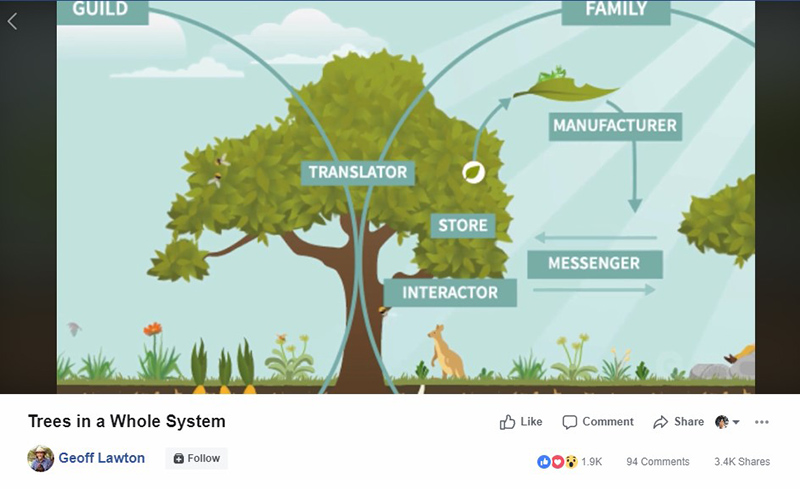
Live-action footage could show what a farm, tree, chicken house, or landscape looked like. But many important concepts were not visible on the surface. Topics such as Trees & Their Energy Transactions required learners to understand what was happening behind the visible scene.
This created a learning risk. Learners might recognize the example, but still miss the mechanism behind it. They could watch a real environment and feel that the concept was clear, while the deeper system remained hidden.
For an online design course, that was a problem. Learners did not only need to watch Geoff explain permaculture. They needed to build a clear mental model of how natural systems work, so they could apply the principles across different climates, sites, and design contexts.
The Solution: Revealing the System Behind the Scene
F.Learning Studio partnered with Geoff Lawton to add visual explanation layers into the existing course.
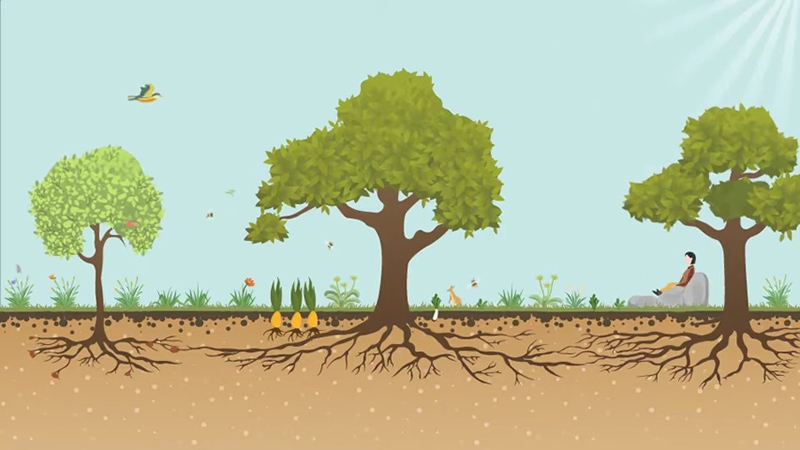
The goal was not to replace Geoff’s teaching or the live-action footage. It was to make the invisible parts of the lesson easier to see: flows, structures, relationships, and step-by-step system logic.
We produced 330 animated learning videos, narrated in Geoff’s own voice to maintain consistency across more than 1,000 course materials.
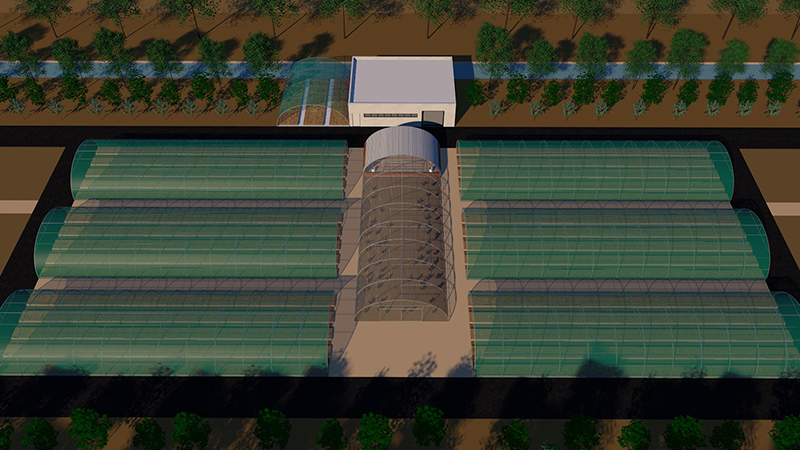
As the topics became more detailed, the visual approach evolved from 2D to 3D motion graphics. This helped explain spatial and structural details that were difficult to capture with footage alone, such as worker accommodation placement, storeroom layouts, and straw thickness in a chicken house.
Together, the blended format gave each medium a clear role: live-action showed the real environment, Geoff’s narration carried expertise, and visual explanation revealed the system behind what learners were seeing.
The Results
The added visual explanations made complex permaculture ideas easier to follow across the course.
Learners could see processes that were previously hidden, connect examples to system logic, and understand why certain design choices mattered. The course also became more varied and easier to navigate across a large library of lessons.
When Geoff shared one of the animated videos on Facebook, it received enthusiastic feedback from learners, showing that the approach supported both clarity and learner engagement.