
Cybersecurity training to reduce risk, phishing, and costly mistakes
We create clear, scenario-based learning media and animations that help employees recognize phishing patterns, handle links and files safely, and respond correctly when something looks off. Used by teams working across email, chat, cloud drives, and shared tools.

Where Training Fails in Real Work Settings
Phishing problems rarely happen because people “don’t know.” They happen in rushed, real work: one quick click, one wrong share, one skipped check.
This challenge typically appears in environments like:

Fast-moving teams
Links and files get shared quickly across chat, email, and drives.
Client-facing workflows
Sensitive materials pass through multiple tools and access points.
Remote and hybrid work
Verification steps get skipped for speed and convenience.
Policy-heavy companies
Rules exist, but habits and responses stay inconsistent.
These aren’t knowledge gaps. They’re moment-of-action gaps-what people do when they’re busy.
What Needs to Go Right
The goal isn’t course completion. It’s preventing the small actions that cause big damage-account takeovers, data leaks, downtime, and expensive recovery work.
To make phishing awareness work:

Everyone must share the same meaning of “safe” vs “suspicious”
The 2-3 critical checks must happen before clicking or sharing
People need clear “what to do next” steps (report, isolate, ask, stop)
Responses must be consistent across email, chat, and shared drives
Our Solution for Cybersecurity Awareness & Phishing Training
We turn phishing risk into clear, real-world scenarios so people can recognize red flags quickly, choose the safe action, and respond the right way. This solution typically includes:

Content structuring
for “safe actions.”
We turn long policies into a simple flow:
red flags → quick checks → safe action → report path.

Scenario-based phishing animation
We show realistic attacks inside the tools people actually use, plus the common “busy mistakes” that lead to incidents.

Interactive practice and response drills
Short decision moments that build habit: verify, pause, report - so the right action becomes automatic.
These components are combined based on your context - not sold as fixed packages. Instead of relying on memory or long policy PDFs, teams share a clear, visual understanding of safe action.
Selected Examples
Cybersecurity Awareness training for a fast-moving team
Problem
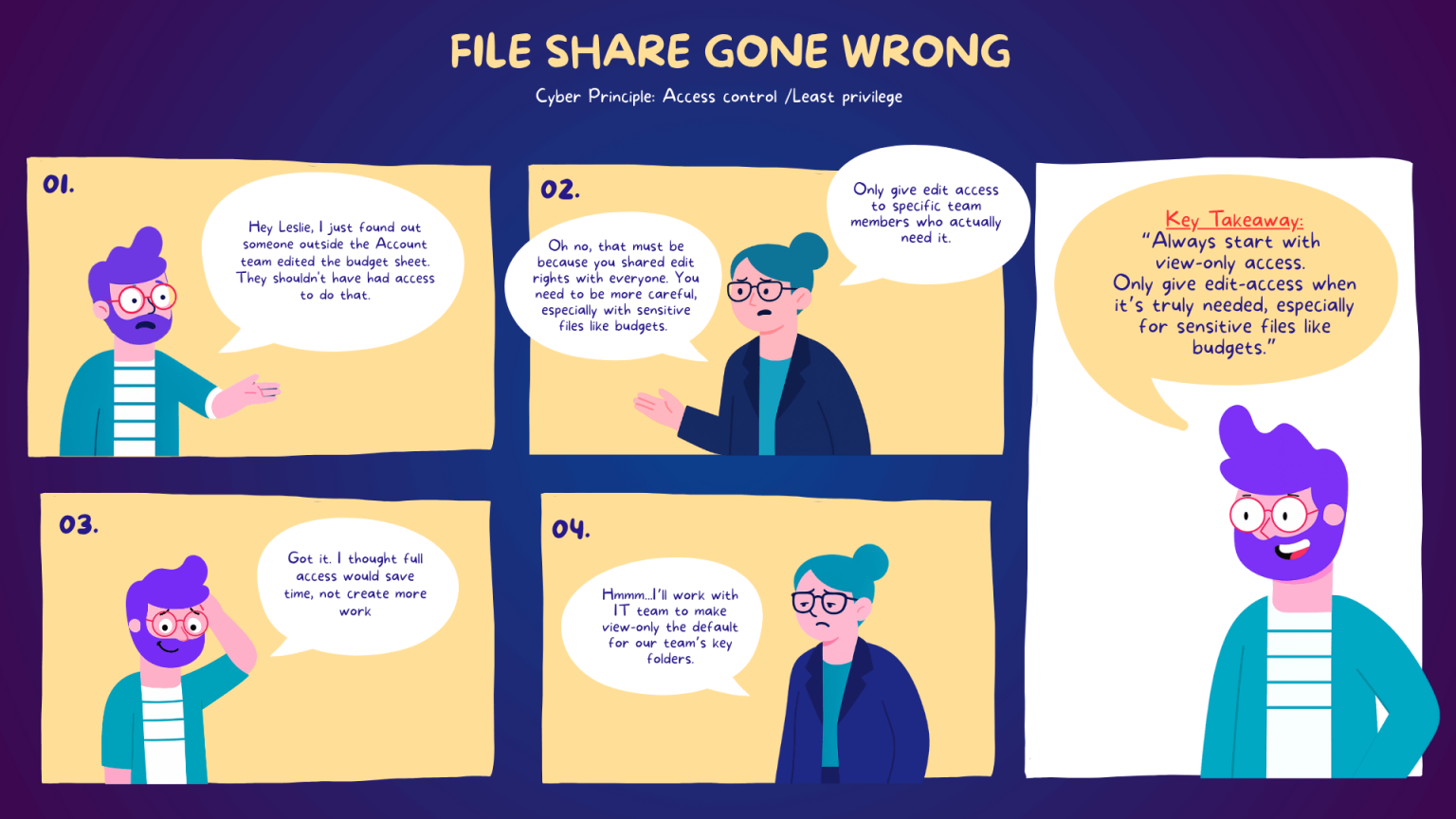
A fast-moving growth team had repeated close-calls: suspicious links clicked, files shared through unsecured channels, and slow reporting because people weren’t sure what counted as “urgent.”
What we did
We rebuilt their training into short scenarios that showed:
- The exact phishing patterns they see in email and chat
- The 3 checks to do before clicking or sharing
- What to do in the first 2 minutes when something looks wrong
Result
- More “pause and verify” behavior before clicking
- Faster reporting with fewer false alarms
- Fewer risky file-sharing actions across roles