
Rigged animation vs frame-by-frame is one of the most important comparisons to understand when choosing the right animation style for your project. These 2 techniques create movement in completely different ways. Rigged animation uses a digital skeleton so animators can move characters like puppets, while frame-by-frame animation redraws each frame to create fluid, handcrafted motion.
In this guide, F. Learning Studio will explain how each method works, its pros and cons, the key differences, and when to use them. Whether you’re producing a series, explainer video, or marketing content, this breakdown will help you choose the best-fit approach.
@babettesy i hope this is worded well help me #alightmotiontutorial#alightmotion#animation#tweening#framebyframeanimation#framebyframe ♬ Club Penguin Pizza Parlor – Cozy Penguin
Understanding Rigged Animation vs Frame-by-frame
Choosing between rigged animation and frame-by-frame animation is essential when shaping the look, feel, and workflow of your project.
Although both create motion, they work in fundamentally different ways: rigged animation relies on a digital skeleton that allows animators to manipulate characters quickly, while frame-by-frame animation requires drawing each individual frame for expressive, handcrafted motion.
What is rigged animation?
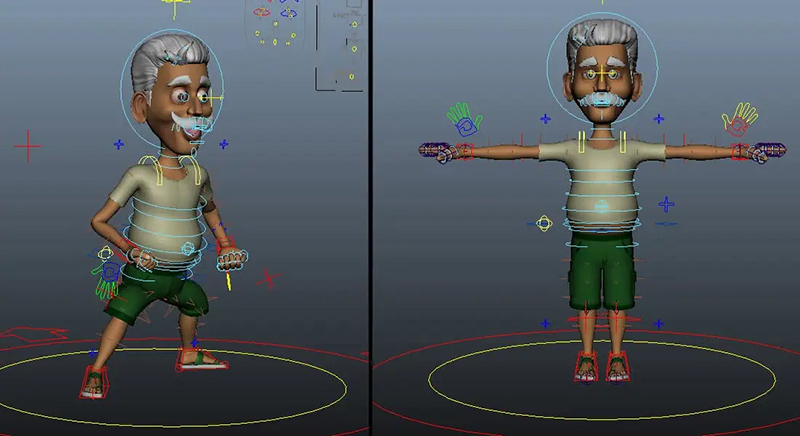
Rigged animation, also called skeletal animation, is a technique where a character is built with an internal digital “skeleton” made of interconnected bones and controls. Animators move these controls to pose and animate the character, allowing it to perform actions smoothly without redrawing each frame.
| Pros | Cons |
| Faster production once the rig is built | It can look mechanical if not animated skillfully |
| Reusable character rigs save time and cost | Limited flexibility for extreme or distorted poses |
| Ideal for long-form content and repeated actions | Requires technical rigging expertise |
| Consistent character proportions and movement | Less organic than hand-drawn animation |
What is frame-by-frame animation?
Frame-by-frame animation is a method where every single frame is drawn or created individually, by hand or digitally. The individual images, or frames, are played in rapid sequence to form smooth, continuous motion, much like a flipbook.

| Pros | Cons |
| Highly expressive, organic, and artistic | Time-consuming due to drawing each frame |
| Unlimited creative flexibility for motion and distortion | Higher cost for longer or complex animations |
| Ideal for emotional storytelling and dynamic actions | Requires strong drawing and timing skills |
| Unique handmade look that stands out visually | Harder to revise once drawn |
Similarities Between Rigged Animation vs Frame-by-frame
Although rigged animation and frame-by-frame animation use different methods to create movement, they share several foundational qualities that make them both valuable in modern production.
Both techniques aim to deliver clear, engaging motion that supports storytelling and enhances viewer experience.
- Both bring characters and objects to life through controlled movement, timing, and visual storytelling.
- Follow core animation principles such as squash and stretch, anticipation, arcs, and timing for believable motion.
- Require strong planning, including storyboards, animatics, and a defined visual style.
- Use similar software ecosystems, such as Toon Boom Harmony, Adobe Animate, or Blender (for 3D rigging vs 2D frame-by-frame).
- Can be combined in hybrid workflows where rigged animation handles base movement while frame-by-frame adds expressive details.
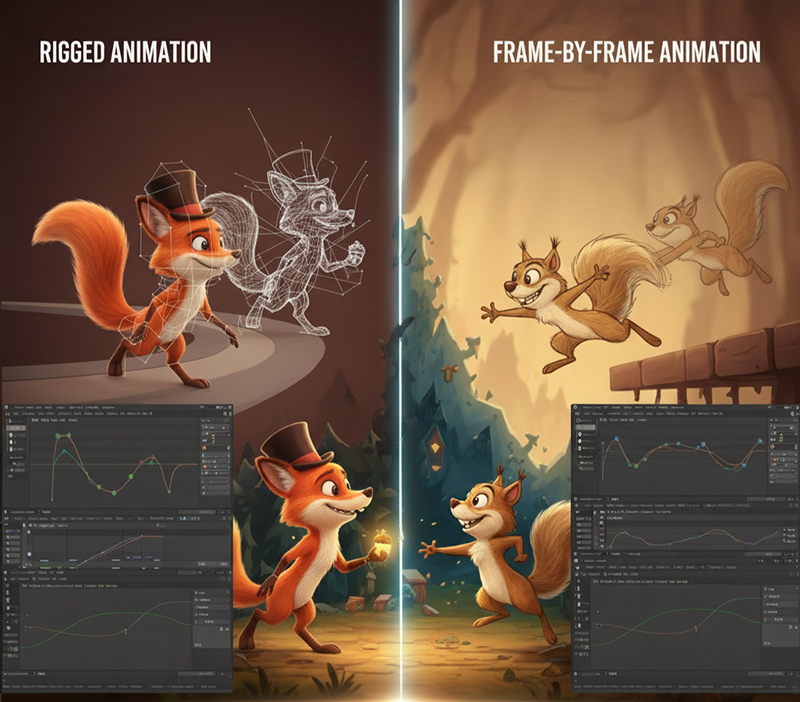
6 Key Differences Between Rigged Animation vs Frame-by-Frame
Rigged animation and frame-by-frame animation may share fundamental principles, but they differ significantly in how motion is created, the level of artistic control they offer, production speed, and ideal use cases. Rigged animation is usually faster and more cost-efficient for long-form content, while frame-by-frame is slower but offers unmatched artistic freedom and emotional nuance.
| Feature | Rigged Animation | Frame-by-Frame Animation |
| Process | Uses a digital skeleton with movable joints; animators pose characters and let the software generate in-between frames. | Every frame is drawn or illustrated individually to create motion. |
| Speed | Faster once the rig is built; ideal for repetitive or long-form content. | Slower due to drawing each frame; production time increases with complexity. |
| Artistic Freedom | Limited to rig structure; harder to achieve extreme poses or stylized distortions. | Full creative freedom; allows exaggerated, expressive, and unique motion. |
| Control | High control over consistency and repeatable actions; easier to revise. | High control over nuance and detail, but harder to revise once drawn. |
| Best For | Series, explainer videos, educational content, game animation, reusable characters. | Emotional storytelling, short films, action scenes, expressive character acting. |
| Cost | Often more cost-efficient for long projects due to reusable rigs. | Typically higher cost per minute due to a labor-intensive drawing process. |
1. Process
Rigged animation works by building a digital skeleton that animators can pose, allowing the software to automatically generate in-between movements. This creates efficiency and consistency, making it easier to adjust actions later.
In contrast, frame-by-frame animation requires artists to draw every movement manually, resulting in fluid, organic motion that reflects the animator’s hand in every frame.
2. Speed
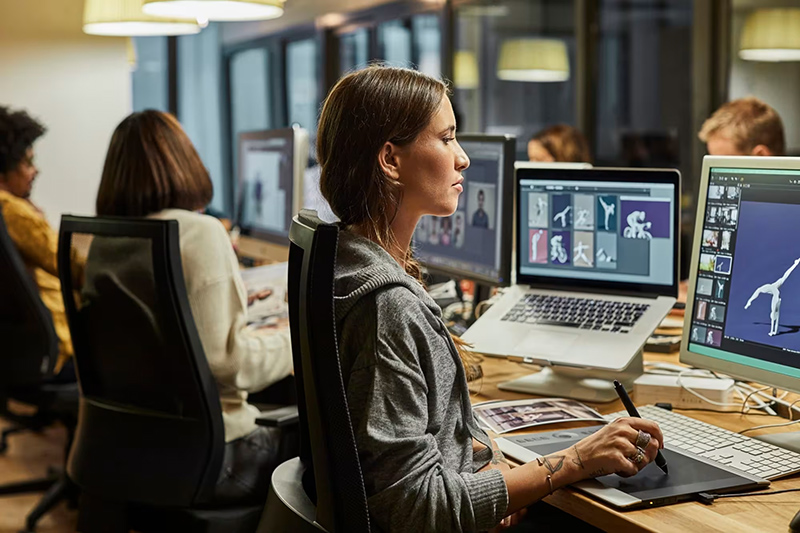
Rigged animation is significantly faster once the rig is set up because animators can reuse assets and replicate actions quickly, making it ideal for long-form or episodic content.
Frame-by-frame animation is slower because each drawing must be created individually. As scenes become more complex, production time increases, often extending timelines.

3. Artistic Freedom
Rigged animation is limited by the structure of the rig, meaning extreme poses, squash-and-stretch, or stylized distortions require extra setup or may not look natural.
Frame-by-frame animation offers full artistic freedom, allowing creators to bend, distort, exaggerate, or stylize movement in any way. This results in expressive, dynamic visuals not easily achievable with rigs.
4. Control
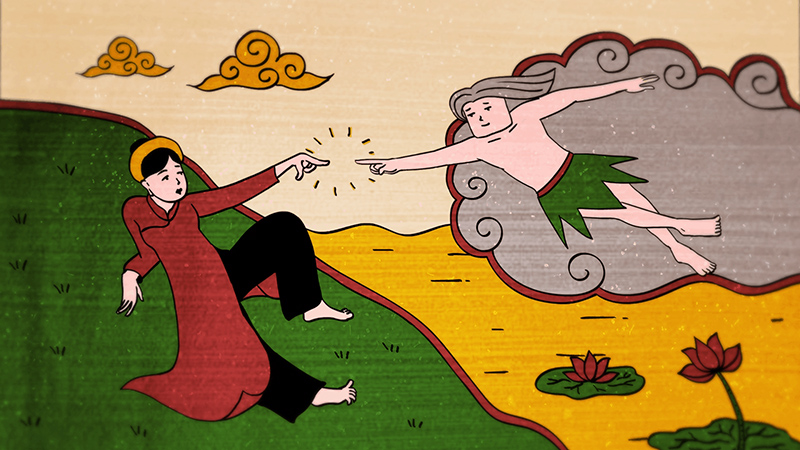
Rigged animation provides strong control over consistency because characters maintain the same proportions and structure throughout. It also allows easy revisions since poses can be adjusted without redrawing.
Frame-by-frame offers fine control over nuanced expressions and micro-movements, but revisions are time-consuming because altering motion often requires redrawing multiple frames.
5. Best uses
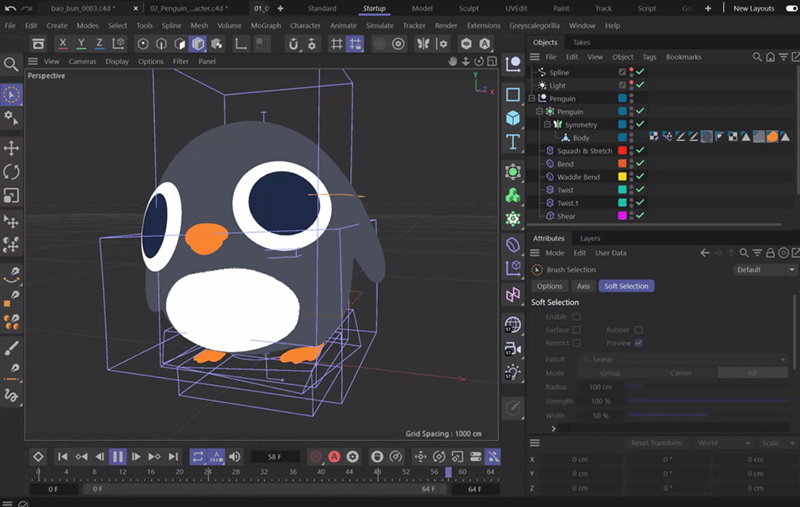
Rigged animation is the better choice for series, explainer videos, eLearning, and game animation where characters need to be reused and production efficiency matters.
Frame-by-frame shines in emotional storytelling, combat sequences, dramatic acting, or scenes requiring expressive performance. It is the preferred style for projects where artistry matters more than speed.
6. Cost
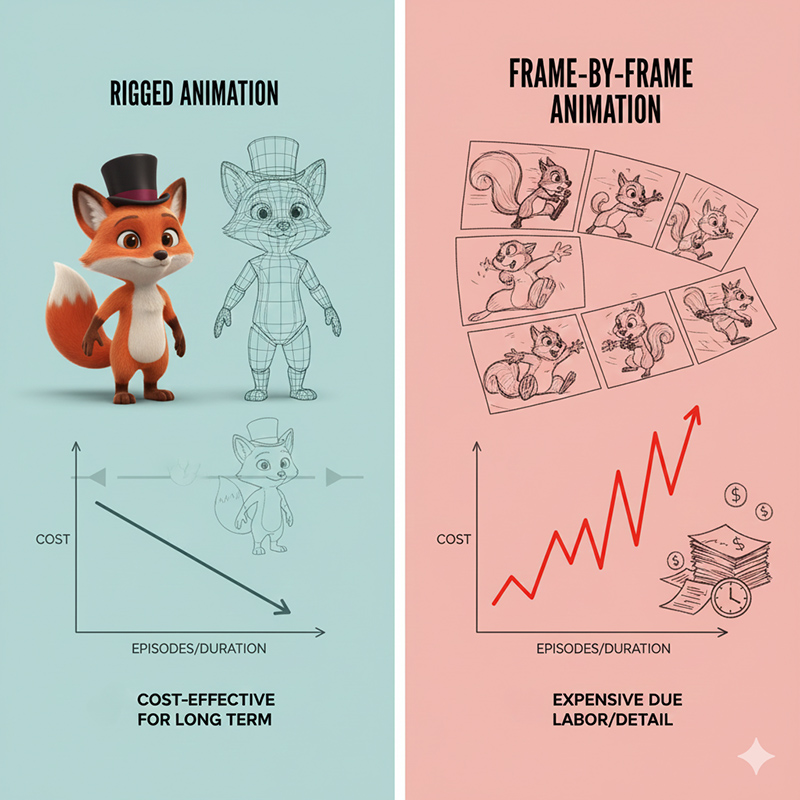
Rigged animation is usually more cost-effective for long-term or multi-episode projects because the rig can be reused endlessly.
Frame-by-frame animation is more expensive due to the labor-intensive nature of drawing every frame, especially at high frame rates. Costs rise further if the project demands detailed artwork or complex movement.
When to Use Each Technique
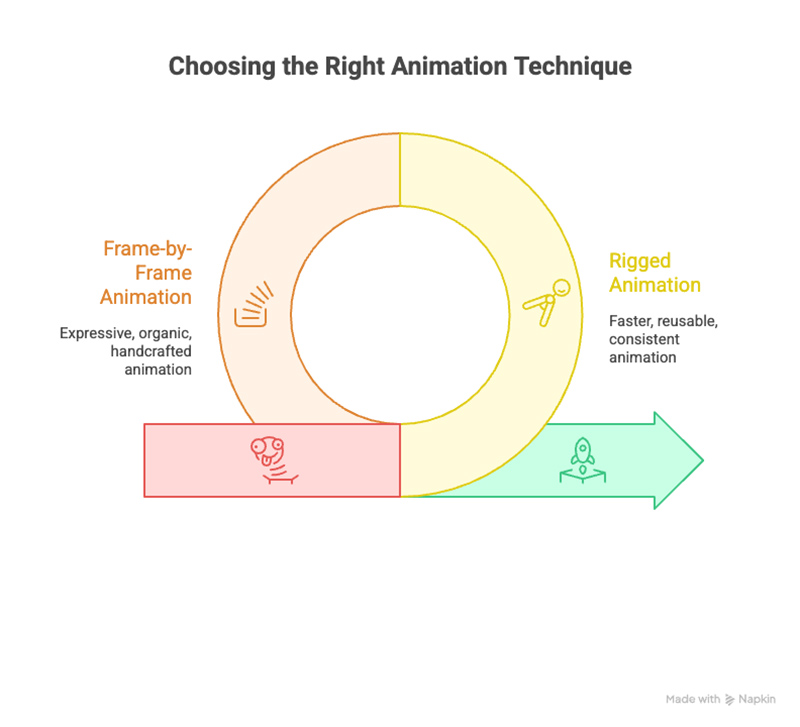
Choosing between rigged animation and frame-by-frame animation depends on your project’s goals, style, timeline, and budget. Each method excels in different contexts, so here’s a short guideline to help you choose the right style to achieve the strongest visual and storytelling impact.
| When to use rigged animation | When to use frame-by-frame animation |
| – You need faster production for long-form content such as series or educational videos. – Your project requires reusable characters or repeated actions, like walk cycles or tutorials. – You want consistent proportions and smooth motion with minimal redrawing. – You have a tight budget but still need professional-quality animation. – Your content relies more on clarity and efficiency than stylized visual expression. | – You need expressive, organic movement with emotional depth. – Your project includes dynamic action, exaggerated motion, or stylized storytelling. – You want a unique, handcrafted look that stands apart from automated animation. – The animation must convey subtle acting, gestures, or emotional nuance. – You’re creating short films, social campaigns, or high-impact scenes where detail matters. |
Hybrid Approaches
Many modern animations combine both techniques to achieve the best of each.
How hybrid animation works:
- Rigged animation handles base motion, simple actions, and character structure.
- Frame-by-frame sequences are added for expressive moments, effects, impact frames, lip-sync nuances, or stylized transitions.
When hybrid animation is ideal:
- Projects needing speed without sacrificing emotion, such as brand videos or character explainers.
- Series or marketing campaigns aiming for consistent visuals with standout hero shots.
- Animations where effects (smoke, hair, water, teleportation, sparks) benefit from hand-drawn fluidity.
- Studios seeking to balance budget, timeline, and artistic ambition.
Not Sure Which Style Suits Your Project Best? F. Learning Studio Can Help
Not sure whether rigged animation or 2D frame-by-frame animation is the right match for your project? F. Learning Studio can guide you. With years of experience producing handcrafted animation for NGOs, global organizations, and educational projects, we help you evaluate your goals and select the animation style that fits both your creative vision and practical needs.
Expert guidance on choosing the right animation style
Our team analyzes your goals, audience, tone, and visual requirements to recommend the best-fit animation approach-rigged, frame-by-frame, or a hybrid workflow. We make sure your final video looks great, communicates effectively, and stays within your production constraints.
If you want a partner who can guide your style choice and bring your vision to life with precision, schedule a FREE consultation and let’s explore what’s possible.
Full-service 2D frame-by-frame animation from concept to final delivery
Our full-service approach covers every stage of production to ensure your animation is handcrafted, expressive, and strategically aligned with your message.
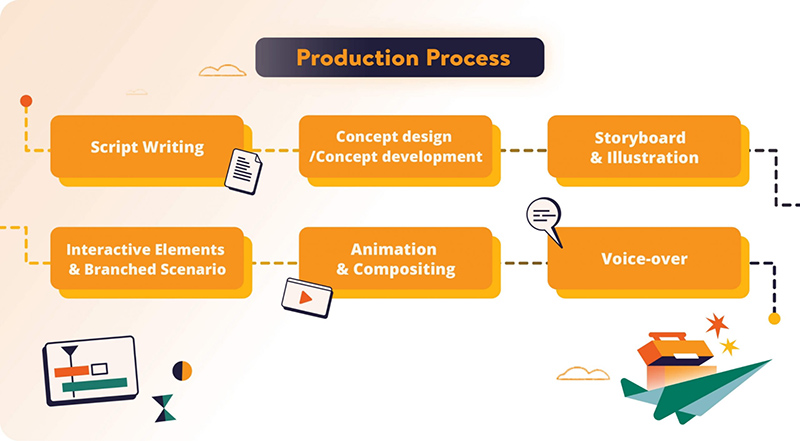
Our process includes:
- Script Writing: Define key messages, story flow, and narrative tone
- Concept Design / Development: Establish visual style, mood, and character direction
- Storyboard & Illustration: Map out each scene and create detailed hand-drawn artwork
- Voice-over: Record clear, professional narration that enhances storytelling
- Interactive Elements & Branched Scenarios (optional): Add engagement or multiple pathways for eLearning.
- Animation & Compositing: Bring visuals to life through fluid, frame-by-frame motion and polished finishing.
Custom style tailored to your brand and story
Every brand has its own personality, audience, and communication style, so your animation should reflect that. We customize every visual element, from character design to color palettes and pacing, to match the tone and identity of your organization.
Our team has extensive experience adapting frame-by-frame animation to fit brands across a wide range of industries, ensuring that each video feels authentic, relevant, and uniquely yours.
- Healthcare & Medical (patient education, research communication, campaigns)
- NGOs & Social Impact (awareness, advocacy, storytelling)
- Technology & SaaS (product explainers, onboarding, UX storytelling)
- Corporate & Professional Services (HR training, culture, internal communication)
- Creative & Marketing Agencies (campaign assets, brand stories)
Conclusion
Understanding the differences between rigged animation vs frame by frame is essential for choosing an animation style that fits your story, budget, and goals. Rigging offers efficiency and consistency, while frame-by-frame animation provides unmatched emotion and artistic freedom.
If you want guidance on selecting the right approach or need support bringing your vision to life, F. Learning Studio is here to help. Our team specializes in handcrafted 2D animation and tailored style recommendations for any project. Reach out anytime for a free consultation.
- WhatsApp: (+84) 378 713 132
- Email: [email protected]
- Fanpage: https://www.facebook.com/f.learningstudio
- LinkedIn: https://www.linkedin.com/company/f-learning-studio/
FAQs
1. Should I choose frame-by-frame or rigged animation for a series?
Rigged animation is usually better for series because it’s faster and more cost-efficient once the rigs are built. Frame-by-frame looks more expressive, but it takes much longer, making it harder to maintain for long-form production.
2. Is rigging more beneficial to the animator than hand drawing?
Yes. Rigging allows animators to move characters without redrawing every frame, reducing workload and speeding up production. Hand drawing offers more artistic freedom but requires significantly more time and effort.
3. Is rigged animation cheaper?
Generally, yes. While building the rig has an upfront cost, production becomes much faster afterward, making rigged animation more budget-friendly than labor-intensive frame-by-frame animation.
4. Rigged animation vs frame-by-frame animation, which one looks better?
Neither style is “better” in every situation. Rigged animation looks clean and consistent, which is great for explainer videos, series, and educational content, while frame-by-frame tends to look more organic and expressive, which is ideal for emotional storytelling or stylized campaigns.
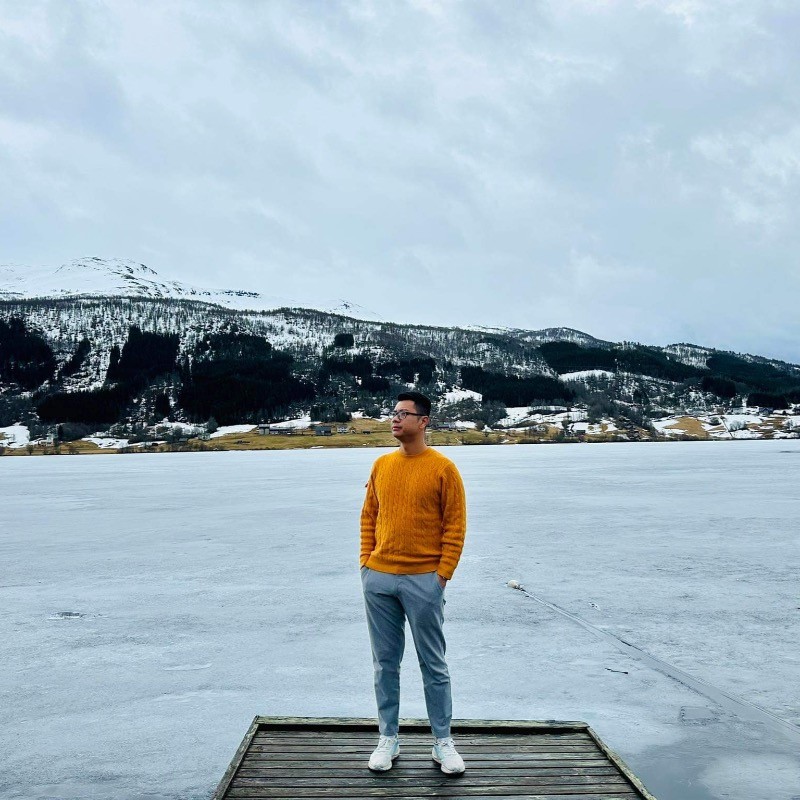
Sean Bui, the founder and creative director of F. Learning Studio, is a respected leader in the e-learning and multimedia production industry.
With over 10 years of experience, he has dedicated his career to helping organizations create engaging and impactful learning experiences. Under his leadership, F.Learning Studio has grown into a trusted partner for organizations in the education, healthcare, and corporate training sectors, producing over 2,000 minutes of educational animation.
Sean’s expertise in translating complex concepts into compelling animated videos and interactive learning experiences, as well as his active involvement in the e-learning community, have earned him a reputation as a trusted partner and thought leader in the field of educational technology.